Last Tuesday, a local owner in Balham contacted our emergency team at 2 am after discovering their Labrador had ruined a new rug for the third time that night. It’s a situation many of us have faced, where the initial frustration of cleaning a London flat quickly turns into a deep, gnawing worry about hidden illnesses like parvovirus. We understand that seeing your dog unwell is incredibly stressful, especially when you aren’t sure if a simple upset stomach has become a clinical emergency.
In our experience at Streatham Hill Vets, diarrhea in canines is one of the most common reasons for a late-night consultation, yet many cases can be managed safely with the right home care plan. This guide will provide you with expert clinical advice on identifying specific triggers common to South London dogs, such as scavenged street food or park-borne parasites. You will learn how to settle your dog’s digestion at home and, crucially, identify the exact red flags that mean it’s time to visit our 24-hour award-winning practice. We’ve designed this overview to give you the confidence to care for your companion while ensuring our specialist team is always here if you need us.
Key Takeaways
- Learn the crucial distinction between acute and chronic presentations and why we view this condition as a symptom of an underlying issue rather than a standalone disease.
- Identify common urban triggers for loose stools, including the “scavenger’s tummy” we frequently see in dogs across Streatham, Clapham, and Balham.
- Recognise the urgent “red flag” symptoms of diarrhea in canines, such as the presence of blood, that require immediate assessment by our 24-hour emergency team.
- Discover the modern veterinary approach to home management, including the correct way to prepare a gentle, bland diet to support your dog’s recovery.
- Understand what to expect during a professional consultation at our surgery and how our advanced diagnostic tools help us provide a precise diagnosis for your pet.
Understanding Diarrhoea in Canines: What is Normal?
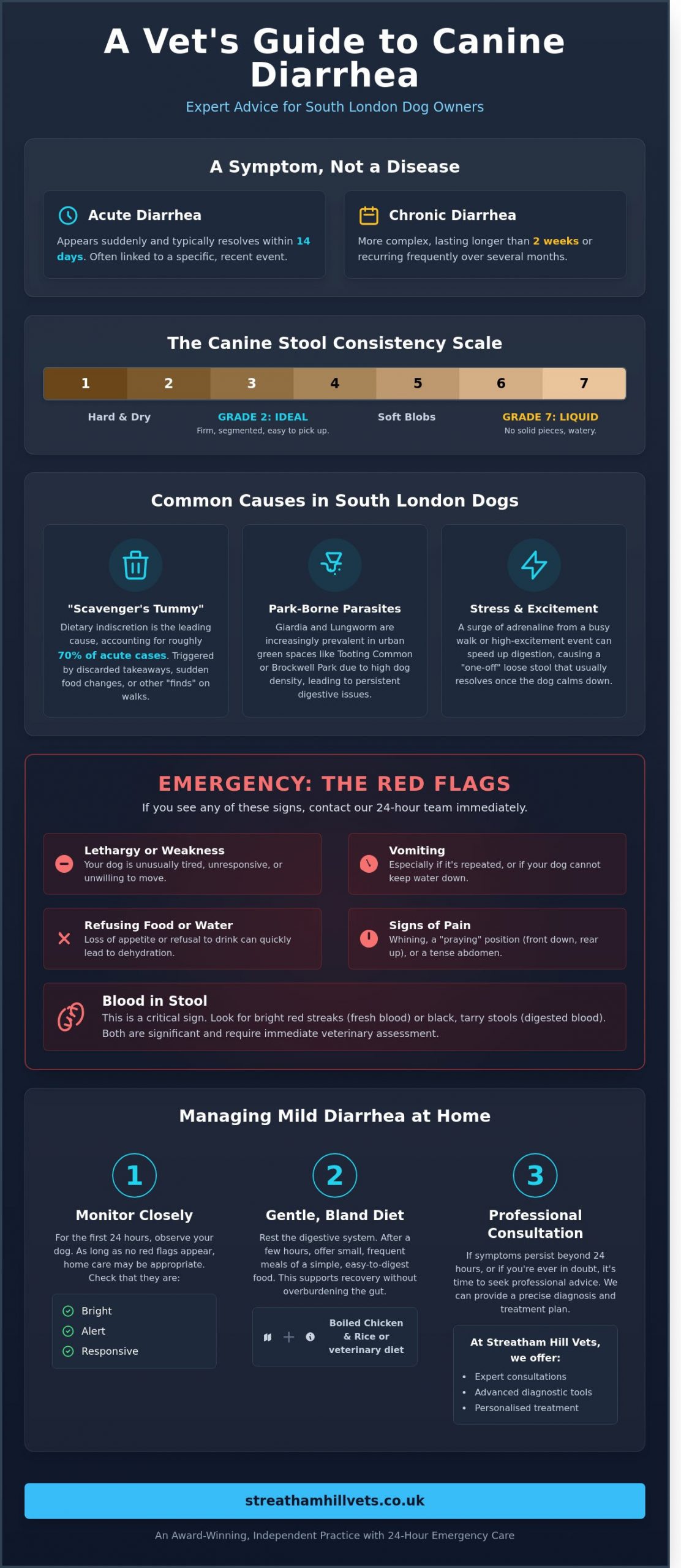
Diarrhoea is one of the most frequent reasons pet owners visit our South London practice. It’s vital to remember that diarrhoea isn’t a standalone disease; it’s a clinical symptom indicating that something has disrupted the normal digestive process. At Streatham Hill Vets, we categorise these cases into two main groups. Acute diarrhoea appears suddenly and typically resolves within 14 days. Chronic presentations are more complex, lasting longer than two weeks or recurring frequently over several months.
In our experience, roughly 70% of the acute cases we see in Streatham and Balham are caused by dietary indiscretion. This is often the result of a scavenger’s “find” during a walk or a sudden change in brand of kibble. While a loose stool is messy, it’s the body’s way of rapidly expelling something it doesn’t like. To help us assess your dog, we often refer to a stool scale from 1 to 7. A “perfect” stool is a grade 2: firm, segmented, and easy to pick up without leaving a mark on the grass. As we move toward grade 7, the stool becomes entirely liquid with no solid pieces.
The Role of the Gastrointestinal Tract
The colon’s primary job is to absorb water and electrolytes back into the body. When the intestinal lining becomes irritated or inflamed, this process fails. Instead of being absorbed, water stays in the stool, leading to the liquid consistency we recognise as infectious causes of canine diarrhoea or simple irritation. This inflammation also triggers “hypermotility,” where the gut muscles contract faster than usual, forcing waste through the system before it can be properly processed.
We also differentiate between small bowel and large bowel issues. Small bowel diarrhoea usually involves large volumes of stool passed at a normal frequency. Large bowel diarrhoea often presents as small, frequent amounts passed with significant urgency or straining. You might even notice a jelly-like mucus coating the stool, which is a sign of colonic irritation. Identifying these patterns helps our clinical team decide if your pet needs a simple probiotic or more advanced diagnostics like those available at our AVL referral hospital.
When “Loose” Isn’t Always a Crisis
It’s quite common for a dog to have a “one-off” loose movement that doesn’t require medical intervention. High-excitement environments, such as a busy weekend walk on Streatham Common, can trigger a surge of adrenaline that speeds up digestion. This “stress diarrhoea” usually resolves as soon as the dog settles back down at home. If your dog is still “BAR”—Bright, Alert, and Responsive—and is happy to eat and play, you can often monitor them for 24 hours.
However, if the loose movements persist beyond two or three episodes, or if you notice lethargy and vomiting, it’s time to seek professional advice. Because we’re an independent practice with 24-hour emergency care, we’re always here to help if you’re concerned. For many of our clients, being part of our VIP Health Plan provides extra peace of mind, ensuring their pets are protected against parasites that might otherwise cause chronic tummy upsets. If you’re based in Streatham, Clapham or Balham and would like advice, our team is always happy to help, including 24-hour emergency care if needed.
Common Causes of Loose Stools in South London Dogs
In our South London consulting rooms, we frequently see cases of diarrhea in canines that stem from what we call “Scavenger’s Tummy.” Urban dogs are exposed to a variety of tempting but troublesome items during their daily walks in places like Tooting Common or Brockwell Park. Whether it’s a discarded takeaway or a rich treat that doesn’t agree with them, sudden dietary changes often trigger acute digestive upset. While some cases are mild, others require clinical intervention to prevent dehydration and manage pain.
Parasites represent another significant challenge in our communal green spaces. In our experience, Giardia and Lungworm are increasingly prevalent in the local environment. These aren’t just “country dog” problems; they’re very much present in our city parks where high dog density increases the risk of transmission. If your pet is experiencing persistent issues, we might suggest at-home care for mild canine diarrhea as a starting point, provided they remain bright and are still eating. However, if symptoms persist beyond 24 hours, a diagnostic check is essential to rule out more serious infections.
The Urban Fox Factor
Living in Streatham, Clapham, or Balham means sharing our gardens with a dense population of urban foxes. We often find that dogs who scavenge fox faeces or lick areas where foxes have been active are at a higher risk of contracting Campylobacter or Salmonella. These bacteria cause significant gut inflammation and can sometimes be passed to humans. To reduce this risk, we recommend supervising night-time garden breaks or using motion-activated lighting to discourage wildlife from settling in your outdoor spaces. This simple step helps prevent your dog from ingesting high bacterial loads while you aren’t looking.
Infectious Diseases and Vaccinations
Protecting your dog’s gut health starts with robust preventative healthcare. We still see heartbreaking cases of Parvovirus in unvaccinated urban populations, which is a highly contagious and life-threatening cause of diarrhea in canines. Our VIP health plans are designed to provide comprehensive protection against these threats, including regular parasite control and annual vaccinations. As an independent, multi-award-winning practice, we prioritise continuity of care, ensuring your pet sees a familiar face who understands their medical history.
If you’re based in Streatham, Clapham or Balham and would like advice, our team is always happy to help, including 24-hour emergency care if needed. You can view our standard consultation prices online to help you plan your visit.
When is Canine Diarrhoea an Emergency? The Red Flags
While many cases of digestive upset resolve with a day of bland food and rest, we often see patients where waiting even a few hours could lead to a serious clinical decline. Distinguishing between a mild “upset tummy” and a genuine emergency is a vital skill for any pet owner. In our experience at the clinic, the presence of blood is the most common reason for concern. Bright red, fresh blood, known as haematochezia, typically indicates inflammation in the lower colon. However, dark, black, or tarry stools, called melena, suggest bleeding further up in the digestive tract. Both require professional assessment, but melena is often a sign of a more significant internal issue.
The combination of vomiting and diarrhoea is a particularly high priority. When a dog loses fluids from both ends, they can’t keep water down to replenish themselves, leading to a rapid drop in blood pressure and potential organ stress. According to Washington State University’s Veterinary Teaching Hospital, persistent diarrhea in canines can lead to severe metabolic disturbances if left untreated. We are especially cautious with puppies under 16 weeks old, senior dogs over 10 years, and any pet with pre-existing conditions like kidney disease or diabetes, as these patients have far lower physical reserves.
Recognising Dehydration and Pain
You can perform a quick health check at home to gauge the severity of the situation. Lift your dog’s lip and feel their gums; they should be moist and “slippery.” If they feel tacky, dry, or look pale, your dog is likely dehydrated. Another reliable test is “skin tenting.” Gently pinch the skin between your dog’s shoulder blades and let go. In a healthy, hydrated dog, the skin snaps back instantly. If it remains peaked or moves back slowly, it’s time to call us. We also look for signs of abdominal pain, such as the “prayer position,” where a dog stretches their front legs out flat while keeping their rear end in the air. This, combined with restless pacing or unusual lethargy, indicates significant discomfort.
Our 24-Hour Commitment in Streatham
We understand how distressing it is when your companion falls ill late at night. Because we are an independent practice, we prioritise continuity of care and the peace of mind that comes from seeing a team that knows your pet. We provide emergency 24-hour vetcare 365 days a year, right here in South London. This means you won’t be redirected to a distant, unfamiliar corporate clinic in the middle of the night. For the most critical cases, our Advanced Vetcare London (AVL) referral hospital provides onsite access to specialists and advanced diagnostics. Whether it’s 3:00 PM or 3:00 AM, our team is ready to provide the gentle, expert care your dog deserves.
How to Manage Mild Diarrhoea at Home: A Step-by-Step Guide
In our experience at Streatham Hill Vets, we often see owners who feel unsure whether to fast their pet when a tummy upset strikes. While older advice suggested a strict 24-hour fast, modern clinical practice suggests that resting the gut should be brief. For most healthy adult dogs, a 6 to 8 hour break from food is sufficient to allow inflammation to settle. Puppies should never be fasted because they lack the energy reserves to cope with a drop in blood sugar. Providing small, digestible meals early in the recovery process actually helps the intestinal cells heal faster and maintains the integrity of the gut lining.
The Bland Diet Protocol
When you start reintroducing food, the goal is simplicity and high digestibility. We recommend a ratio of one part lean protein to two parts white rice. Use boiled chicken breast without the skin or bones; alternatively, steamed white fish like cod or haddock works well for pets with poultry sensitivities. Overcook the rice slightly so it is soft and easy for the system to process. Rather than two large meals, divide the daily portion into six small servings. This prevents the stomach from becoming overstretched and reduces the risk of further diarrhea in canines. We often suggest adding a veterinary-grade probiotic paste, such as Pro-Kolin, which contains kaolin to help firm the stool and beneficial bacteria to restore the gut’s natural microbiome.
Monitoring Progress
Keeping a simple stool diary is an excellent way to track your pet’s recovery. Record the frequency, volume, and consistency of every movement over a 48 hour period. You must avoid giving human medications like Imodium or Pepto-Bismol. These can be toxic to certain breeds, such as Collies, and often mask the underlying cause of the upset rather than treating it. Hydration is equally vital; if your dog is reluctant to drink plain water, try offering the cooled liquid used to boil the chicken. This provides essential fluids and nutrients without the high sodium content found in commercial stocks.
The 24-hour rule is our standard recommendation for home care. If you don’t see a clear improvement in consistency within a day, or if your pet becomes lethargic or starts vomiting, it’s time to seek professional advice. Managing diarrhea in canines requires a patient approach, and the transition back to regular kibble should take at least three days. Start by mixing 25% of their normal food with the bland diet, gradually increasing the proportion as long as the stools remain firm. For those who want to stay ahead of digestive health, our VIP Health Plan offers a proactive way to manage your pet’s overall wellbeing with regular check-ups and preventative care.
Professional Diagnosis and Treatment at Streatham Hill Vets
When you bring your dog to our surgery with a stomach upset, we begin with a comprehensive clinical examination. We’ll talk through your pet’s history, their diet, and the specific nature of their symptoms. In our experience, we often find that a detailed conversation about recent walks in Brockwell Park or a change in treats provides the first vital clue. Understanding the root cause of diarrhea in canines is the first step toward a tailored recovery plan.
To get a clear picture of what’s happening internally, we use several diagnostic tools. Faecal analysis helps us identify parasites, protozoa, or bacterial overgrowth that might be causing irritation. Blood tests allow us to check organ function and hydration levels, while ultrasound provides a real-time view of the intestinal walls and surrounding organs. For persistent or chronic cases, we may recommend endoscopic biopsies. This minimally invasive procedure allows us to take tiny tissue samples from the gut lining to diagnose complex conditions like Inflammatory Bowel Disease (IBD) without the need for major surgery.
If your dog is severely dehydrated or unable to keep food down, they may require hospitalisation at our Streatham practice. Here, we provide intravenous (IV) fluid therapy and round-the-clock monitoring. Being an independent practice with 24-hour emergency care means your pet is never left alone. We provide constant support until they’re stable enough to head home to Clapham or Balham.
Advanced Diagnostics: CT and Beyond
Our facility is equipped with on-site CT scanning technology. This is essential for complex abdominal issues where standard x-rays don’t show the full picture. Our team includes certificate holders in internal medicine who manage difficult cases of chronic diarrhea in canines with clinical precision. If a case requires ultra-specialist intervention, we work closely with the Advanced Vetcare London (AVL) referral hospital, our sister site that provides Tier 3 specialist care right here in the capital.
Long-term Gut Health and Support
Managing digestive health is an ongoing commitment rather than a one-off fix. Our VIP Health Plan helps South London owners stay on top of preventative care, including regular parasite control which is a frequent trigger for gut issues. We also provide tailored advice on high-quality nutrition. Switching to a hypoallergenic or prescription diet can transform the life of a dog with a sensitive stomach. We’ve seen many local pets return to their happy, energetic selves after simple, expert-led dietary adjustments.
If you’re based in Streatham, Clapham or Balham and would like advice, our team is always happy to help, including 24-hour emergency care if needed.
Supporting your dog through digestive upsets
Most cases of diarrhea in canines are mild and resolve with rest and a bland diet, but it’s vital to stay vigilant for red flags like lethargy or blood in the stool. In our experience, early intervention prevents a simple upset from becoming a more serious medical issue. As a multi-award-winning independent practice, we’ve spent years supporting the South London community through every kind of pet health concern. We’re proud to offer advanced diagnostic tools including in-house CT and MRI scans at our Streatham surgery; this ensures your companion receives a precise diagnosis without the need for external referrals.
You know your pet better than anyone else does. If you’re worried about their symptoms or if home care isn’t helping, don’t hesitate to seek professional guidance from a trusted vet. If you’re based in Streatham, Clapham or Balham and would like advice, our team is always happy to help, including 24-hour emergency care if needed. We’re here to ensure your dog returns to their happy, energetic self as quickly as possible.
Frequently Asked Questions About Diarrhoea
Can I give my dog scrambled eggs for diarrhoea?
Plain scrambled eggs are an excellent, highly digestible protein source for a dog with a sensitive stomach. You must ensure they’re prepared without any butter, oil, or milk, as fats and dairy often worsen intestinal irritation. In our experience, combining eggs with a little plain white rice provides a gentle transition back to regular meals. We typically recommend this bland diet for 2 or 3 days until stools begin to firm up.
How long should canine diarrhoea last before I see a vet?
You should contact us if the upset lasts longer than 24 hours or if your dog seems particularly lethargic. While a single loose stool might not be a crisis, prolonged diarrhea in canines leads to dehydration and electrolyte imbalances. For puppies under 6 months or senior dogs, we advise calling our Streatham team within 12 hours. Since we’re an independent practice with 24-hour emergency availability, you can reach us at any time for professional peace of mind.
Is pumpkin a good home remedy for loose stools in dogs?
Plain, cooked pumpkin is a helpful remedy because it’s packed with soluble fibre which absorbs excess moisture in the colon. We suggest adding 1 to 4 tablespoons of pureed pumpkin to their meal, depending on their weight. It’s vital to use 100% natural pumpkin rather than sweetened pie fillings, which contain xylitol or spices that are toxic to pets. If you don’t see an improvement within 48 hours, a clinical assessment is necessary.
Can stress cause a dog to have diarrhoea?
Stress is a very common trigger for acute colitis in dogs, which often manifests as sudden, liquid stools. We frequently see this in our South London clinics after significant life events like moving house or the arrival of a new baby. The release of cortisol affects the gut’s motility and microbiome balance. Most stress-related cases resolve quickly with a calm environment and a probiotic paste, which our nursing team can provide.
Is blood in my dog’s stool always an emergency?
While seeing blood is frightening, a few streaks of bright red blood often indicate simple inflammation of the lower bowel. However, if the stool is dark, tarry, or accompanied by vomiting, it’s a medical priority. Because we operate a 24-hour emergency service at Streatham Hill, we can perform immediate diagnostics like ultrasound or blood tests. It’s always better to be cautious, so please call us for a professional opinion if you notice any discolouration.
Should I withhold water if my dog has diarrhoea?
You should never withhold water, as maintaining hydration is the most important part of managing diarrhea in canines. A dog losing fluids through loose stools can become dehydrated in as little as 12 to 18 hours. If your pet is drinking excessively or cannot keep water down, this suggests a more complex issue. In these instances, our AVL referral hospital can provide intravenous fluid therapy to support their recovery and protect their kidney function.
Can my dog catch diarrhoea from other dogs in the park?
Many causes of gastric upset are highly contagious and easily spread in busy spots like Brockwell Park or Tooting Common. Parasites like giardia or viral infections can be picked up from shared water bowls or communal grass areas. We find that dogs on our Healthcare Plan have better protection against these risks. If your dog is socialising frequently, ensure their vaccinations and parasite preventatives are fully up to date to minimise the chance of infection.
What is the most common cause of sudden diarrhoea in London dogs?
Dietary indiscretion, which is the clinical term for eating rubbish or street treats, is the leading cause we treat. In our busy South London neighbourhood, dogs often scavenge discarded food or toxins during their daily walks. Around 65% of the acute cases we see at Streatham Hill Vets stem from these scavenged items. Our in-house CT and MRI scanners allow us to quickly rule out any internal blockages if we suspect they’ve swallowed something dangerous.
If you’re based in Streatham, Clapham or Balham and would like advice, our team is always happy to help; this includes 24-hour emergency care if needed.