
Last Tuesday night in Balham, an anxious owner sat beside their queen as she began her first stage of labour, feeling a mix of excitement and a growing sense of dread as the hours passed without a kitten appearing. It’s a scenario we often see at our Streatham practice; that moment when the joy of new life is overshadowed by the fear that something is going wrong. If you find yourself in this position, knowing when to contact a cat in labour emergency vet london is vital for the safety of both the mother and her litter. You want the very best for your companion, but it’s incredibly difficult to remain calm when you’re unsure if what you’re seeing is a natural pause or a genuine medical crisis.
We understand that your cat’s health is your absolute priority, and clear clinical guidance makes all the difference during these high-pressure moments. This article will help you recognise the critical warning signs that necessitate urgent intervention, providing a definitive checklist to replace uncertainty with action. You’ll learn how to distinguish between normal delivery and complications that require our 24-hour hospital care, alongside expert advice on safe transport to our South London facility to ensure the best outcome for your family.
Key Takeaways
- Understand the natural stages of “queening” and why having a proactive 24-hour plan is essential for every expectant cat owner in South London.
- Learn to recognise the critical signs of “dystocia” and know exactly when to contact a cat in labour emergency vet london to prevent life-threatening complications.
- Discover the vital immediate steps to take while travelling to our Streatham surgery to ensure our night team is fully prepared for your arrival.
- Explore how professional intervention—from advanced ultrasound diagnostics to emergency theatre—safeguards the health of both the mother and her kittens.
- Gain peace of mind by understanding the 24-hour support and expert clinical care available at our award-winning, independent hospital.
Understanding the Normal Stages of Cat Labour (Queening)
Queening is the clinical term we use to describe the natural process of feline parturition, or giving birth. While the majority of cats manage the delivery of their kittens with remarkable instinct and minimal fuss, the experience can feel daunting for owners. In our clinical experience at Streatham Hill, we’ve observed that thorough preparation reduces maternal stress levels significantly. For those living in Streatham, Clapham, or Balham, having a robust 24-hour plan is essential. Knowing exactly where to find a cat in labour emergency vet london specialist before the process begins ensures that you can remain a calm, supportive presence for your pet.
Preparation starts well before the first contraction. We recommend establishing a quiet, warm, and secluded nesting environment at least two weeks before the expected due date. This allows your cat to feel secure in her chosen space. Being an independent practice, we pride ourselves on supporting local owners through every stage of their pet’s life, and we’re always available to discuss your cat’s specific needs during a routine check-up.
Stage One: The Preparation Phase
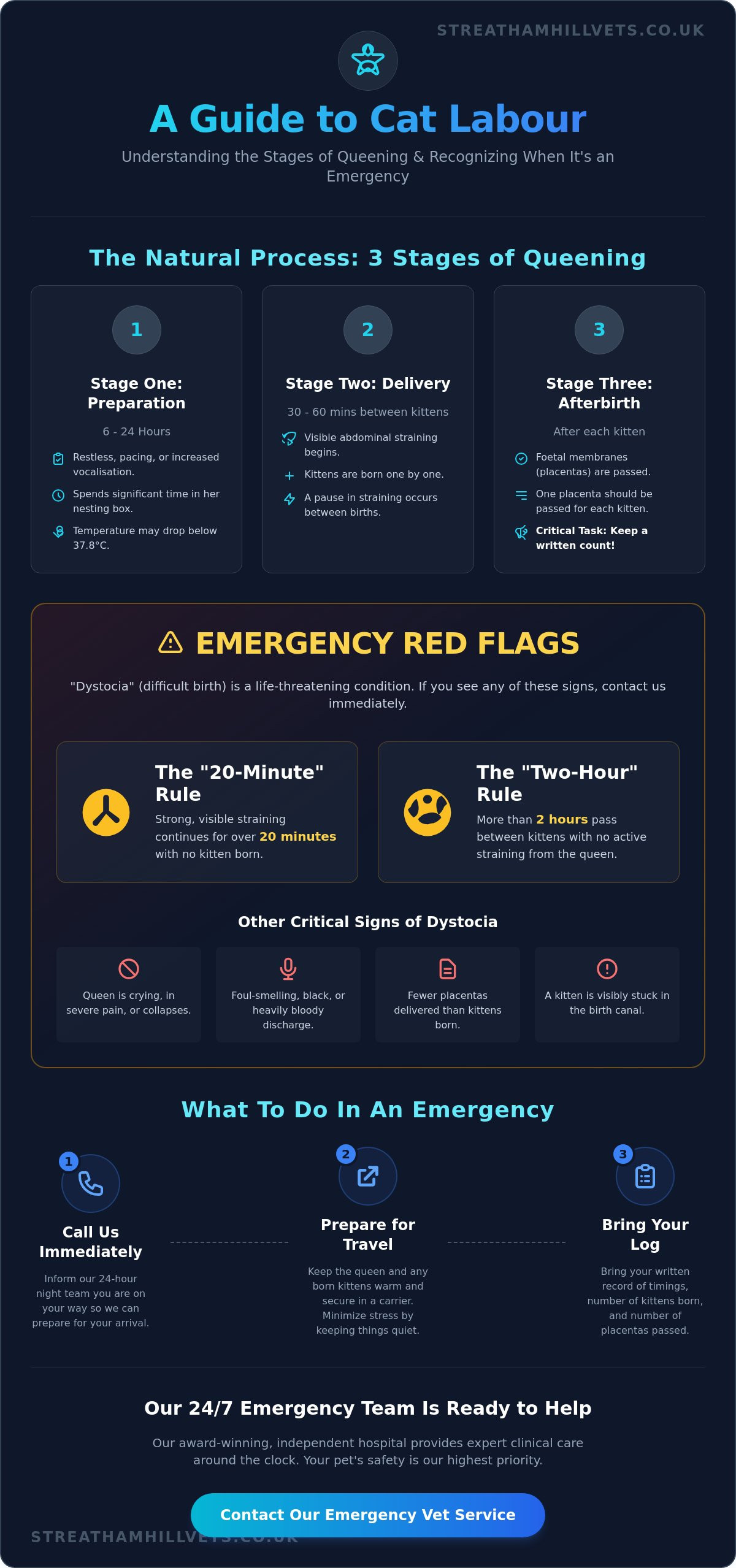
This initial stage involves the physical and behavioural changes that signal the body is ready for birth. You’ll likely notice your cat becoming increasingly restless, pacing, or vocalising more than usual. She may lose her appetite entirely and spend a significant amount of time in her nesting box. From a clinical perspective, a key indicator is a drop in her rectal temperature, which often falls below 37.8°C roughly 24 hours before active labour begins. This stage typically lasts between 6 and 12 hours, though it’s not uncommon for it to extend to 24 hours in some instances. Understanding the normal development of kittens helps you appreciate the energy your cat is about to exert during this transition.
Stages Two and Three: Delivery and Afterbirth
Stage two is the active phase of labour where you’ll see visible abdominal straining. This leads to the birth of the kittens, usually with 30 to 60 minutes of straining between each arrival. Stage three involves the passing of the foetal membranes, or placentas, which should occur after each kitten is born. It’s vital that you count the placentas carefully. A retained placenta can lead to serious uterine infections, which may require urgent care. If you have any concerns about the progress of the delivery, our emergency 24-hour vetcare team is always on hand to provide advice or intervention. Most deliveries are straightforward, but having access to a cat in labour emergency vet london service provides a vital safety net for your family.
- Monitor the time between kittens closely.
- Keep a written log of how many kittens and placentas have emerged.
- Ensure the environment remains dim and quiet to prevent interruptions.
Recognising Red Flags: When Cat Labour Becomes an Emergency
While many owners believe cats are naturally equipped to handle birth without intervention, complications occur more frequently than you might expect. In our experience at Streatham Hill Vets, we often see cases where a “wait and see” approach has led to critical situations. Dystocia occurs when the queen is unable to expel the foetus through the birth canal without professional assistance. This condition isn’t just stressful; it’s a medical emergency that can threaten the lives of both the mother and her kittens.
Delaying treatment when a cat is struggling can lead to uterine rupture, severe infection, or the loss of the entire litter. Our independent practice prioritises the well-being of the queen above all else. If you’re concerned about your cat in labour emergency vet london professionals at our clinic are ready to provide immediate triage and support through our 24-hour emergency vetcare service.
The “20-Minute” and “Two-Hour” Rules
We advise owners in Streatham and Clapham to monitor the clock closely during the birthing process. Timing is the most reliable indicator of whether the labour is progressing normally. You should contact us immediately if you notice either of the following:
- Active Straining: Strong, visible contractions for more than 20 minutes without a kitten being produced.
- Prolonged Gaps: More than two hours passing between the birth of kittens when the queen is no longer actively straining.
Dystocia occurs when the queen is unable to expel the foetus through the birth canal without professional assistance. Following established veterinary advice on cat birth helps ensure these windows aren’t missed. Kittens can quickly run out of oxygen or become distressed if the labour stalls for too long, making every minute count.
Physical Signs of Maternal Distress
Beyond the clock, your cat’s physical condition and the nature of any discharge provide vital clues. A small amount of clear or slightly bloody fluid is normal, but certain signs indicate a crisis. Look out for greenish discharge before any kittens have been born, or heavy, persistent bleeding that doesn’t stop. These symptoms often signal placental issues or internal trauma that require a clinical assessment.
Maternal exhaustion is another serious concern we frequently manage. If the queen appears extremely lethargic, unresponsive, or collapses between births, her body is failing to cope with the physical demand. Occasionally, a kitten may become physically “stuck” in the birth canal. You must never attempt to pull the kitten yourself, as this can cause permanent damage to the mother’s reproductive tract or fatal injury to the newborn.
If you’re unsure whether your pet’s labour is progressing safely, our team is always here to help residents in Balham and the surrounding areas. You can quickly register your pet with us to ensure we have all their medical details ready for any emergency or future wellness checks.
Immediate Steps: What to Do While Heading to Our Streatham Surgery
When you realise your cat is experiencing a complication, the first and most vital step is to phone us immediately. Calling ahead allows our night team to prepare the sterile theatre, set up ultrasound equipment, or ready our oxygen therapy units before you even arrive. While your instinct may be to rush, taking two minutes to provide us with your cat’s history ensures we can provide a seamless transition into clinical care. For non-urgent enquiries, you can book an appointment online, but a cat in labour emergency vet london situation always requires a direct phone call.
In our experience, a queen’s labour can “stall” if she feels threatened or over-stimulated. While you prepare for transport, keep the room dim and quiet. Minimise the number of people in the room and speak in low, soothing tones. This reduces the surge of adrenaline that can naturally inhibit oxytocin, the hormone responsible for contractions. If you suspect a physical blockage or true exhaustion, refer to this clinical overview of dystocia to understand the medical complexities our team will be assessing upon your arrival.
Safe Transport for a Queen in Labour
Moving a cat in active labour requires care to prevent injury to the queen or any unborn kittens. Follow these steps for a safer journey:
- Use a top-loading carrier: This allows our clinical team to assess her gently without forcing her through a narrow side door.
- Absorbent bedding: Line the carrier with clean, dry towels. Avoid hay or loose straw which can interfere with a newborn’s breathing.
- Manage the temperature: Kittens cannot regulate their own body temperature. Ensure the car is pre-warmed to approximately 25°C.
- Separate the litter: If kittens have already been born, place them in a small, secure box with a pet-safe heat pad, keeping them close to the mother but protected from being stepped on during the journey.
Navigating South London Emergencies
Reaching our Streatham High Road surgery quickly is a priority for residents in Balham, Clapham, and Brixton. During peak hours, the A23 can be congested; we recommend using side routes through Tulse Hill or Furzedown if the main road is blocked. We provide dedicated on-site parking at our surgery, which is essential for safely offloading a heavy carrier without the stress of searching for a space on a busy London street.
The moment you walk through our doors, our triage process begins. A qualified veterinary nurse will immediately assess the queen’s heart rate, mucous membrane colour, and the position of any kittens in the birth canal. We don’t use a “first come, first served” system for emergencies; we prioritise based on clinical need to ensure the best possible outcome for your pet. If your cat needs urgent assistance, please contact our emergency 24-hour vetcare team right away.
Professional Emergency Care at Streatham Hill Vets
We understand how stressful it feels when a queen’s delivery doesn’t go to plan. As an independent, multi-award-winning hospital, we’ve built our reputation on being there for South London owners when they need us most. We’re a genuine 24-hour facility, meaning our doors never close and our expert team is always on-site. If you’re searching for a cat in labour emergency vet london, you’ll find our clinicians ready to provide immediate, life-saving intervention at any hour.
Our hospital is equipped with advanced diagnostics, including on-site ultrasound and CT scanning, to quickly assess the position and health of unborn kittens. This technology allows us to make rapid, informed decisions about whether a natural birth can continue or if surgery is required. For those enrolled in our VIP Health Plan, we offer a 10% discount on emergency consultations, helping to ease the pressure during an already difficult time.
On-Site Surgical and Medical Intervention
In many cases, we can assist a stalled labour with medical management. This might involve the precise use of Oxytocin to stimulate contractions, though we only ever do this under strict veterinary supervision after confirming there’s no physical blockage. If surgery is the safest path, we perform emergency C-sections in our sterile theatres. We also offer laparoscopic and advanced surgical options for more complex reproductive issues. Following surgery, your cat and her litter will be monitored around the clock in our dedicated hospitalisation ward, where our nursing team provides gentle, constant care to ensure a smooth recovery.
Supporting South London’s Pet Community
Since we first opened our doors, we’ve remained committed to serving the residents of Streatham, Balham, and Clapham. We’re proud of our local roots and our ability to handle the most critical cases through our partnership with Advanced Vetcare London (AVL). This collaboration ensures that even the most complex feline obstetric emergencies have access to specialist-level care when it’s needed most.
Whether it’s 3 am on a Tuesday or midday on a Bank Holiday, we’re here for you 365 days a year. You don’t have to face a difficult labour alone; our team is just a phone call away. We provide the professional support and clinical expertise you and your cat deserve, ensuring the best possible outcome for the new family. If you’re worried about your cat in labour emergency vet london is available right here at Streatham Hill Vets.
Ensuring a Safe Delivery for Your Cat
Watching your cat bring new life into the world is an extraordinary experience, but it’s vital to remain vigilant throughout the process. While most births proceed without complication, recognising the early signs of distress, such as prolonged straining or unusual discharge, can make all the difference. Our clinical team is always ready to step in when nature needs a helping hand, providing the expert intervention required to keep both the queen and her kittens safe.
As an independent and award-winning practice, we’re proud to serve the pet owners of Streatham, Clapham, and Balham with a 24/7 on-site veterinary team. Our surgery functions as an advanced diagnostic referral centre (AVL), meaning we have the sophisticated technology and expertise to handle even the most complex feline births. If you’re searching for a cat in labour emergency vet london, you can trust our experienced clinicians to provide calm, professional, and empathetic care at any hour of the day or night.
If you are worried about your cat in labour, call our 24-hour emergency line immediately on 020 8677 0976 or visit streathamhillvets.co.uk. We’re here to support you and your growing feline family every step of the way.
Frequently Asked Questions
How long can a cat be in labour before it is an emergency?
A cat should produce a kitten within 60 minutes of starting intense, active straining. If your pet has been pushing consistently for more than an hour without a kitten appearing, it’s a clear sign of dystocia and you should contact a cat in labour emergency vet london immediately. In our experience at our South London hospital, early intervention is the most effective way to ensure the safety of both the mother and her litter.
My cat has a green discharge but no kittens yet, is this normal?
Seeing a dark green or black discharge before the first kitten is born is a clinical emergency that requires an immediate veterinary assessment. This fluid usually indicates that a placenta has detached from the uterine wall, which potentially cuts off a kitten’s oxygen supply. If you notice this “emerald” discharge in your home in Streatham or Clapham, please call us so our 24-hour team can check the kittens’ heart rates via ultrasound.
What should I do if a kitten is stuck halfway out?
If a kitten is visible but stuck in the birth canal, you can try to help very gently, but you must never use force or pull on the kitten’s limbs. Use a clean, damp cloth to provide a secure grip and apply very slight traction only when the mother is actively contracting. If the kitten doesn’t slide out easily within 5 minutes, you must bring her to our emergency centre in South London to prevent life-threatening complications.
Is it normal for a cat to stop having kittens for a few hours?
It’s relatively common for a cat to experience “interrupted labour,” where she rests for 2 to 4 hours between kittens while nursing those already born. During this rest period, she should appear calm, comfortable, and not be straining at all. However, if she remains restless, shows signs of pain, or starts straining again for more than 30 minutes without success, it’s vital to seek advice from a cat in labour emergency vet london.
How much does an emergency C-section for a cat cost in London?
The cost of an emergency C-section in London typically starts from £800 and can exceed £2,500 depending on the time of night and the level of intensive care the queen and kittens require. This fee generally includes the surgical procedure, anaesthesia, and the dedicated nursing staff needed to revive the newborns. While our healthcare plan offers 10% discounts on many services, emergency surgical fees are calculated based on the complexity of the case at the time of admission.
Can I give my cat anything to help her labour at home?
You shouldn’t give your cat any medications, supplements, or “home remedies” to induce labour, as these can cause the uterus to rupture if a kitten is physically blocked. The most helpful thing you can do is provide a quiet, dim, and warm environment in a familiar part of your home in Balham or Clapham. Keep her hydrated with fresh water and maintain a detailed log of the timings so you can provide our clinical team with accurate information if an emergency arises.