
It is 3:00 AM on a Tuesday in Balham, and your companion is suddenly pacing the room with a distressed look you’ve never seen before. We understand the immediate wave of anxiety that follows; you’re often torn between the fear of a life-threatening crisis and the worry of overreacting to a minor ailment. Every pet owner in South London has faced that moment of hesitation, wondering if a situation warrants an immediate trip to the surgery or if it can wait until morning. To help you make the right call, we’ve put together this guide to help you identify exactly what is a pet emergency and when urgent intervention is non-negotiable.
We agree that the uncertainty of a midnight health scare is one of the most stressful parts of being a pet parent. Our goal is to replace that fear with clinical clarity, providing you with a professional framework to assess your pet’s condition. You’ll learn how to spot the “red flag” symptoms that require immediate attention and understand the diagnostic support available at our independent, multi-award-winning Streatham practice. We will walk you through a clear checklist of urgent symptoms, explaining the difference between a routine concern and a medical crisis that requires our 24-hour expert care.
Key Takeaways
- Understand the clinical distinction between minor ailments and life-threatening crises to ensure your companion receives the right level of care at the right time.
- Discover exactly what is a pet emergency by identifying “Red Flag” symptoms, from acute breathing difficulties to the specific trauma risks of London living.
- Learn to spot the less obvious, time-sensitive indicators of distress, such as urinary changes in male cats or sudden ocular shifts, that require immediate intervention.
- Master the essential “Golden Hour” steps to take during a crisis, including how a simple phone call to our Streatham surgery allows our team to prepare for your arrival.
- Gain peace of mind by understanding the benefits of our independent, 24-hour on-site expertise for pet owners across Streatham, Clapham, and Balham.
Defining a Pet Emergency: The Clinical Perspective
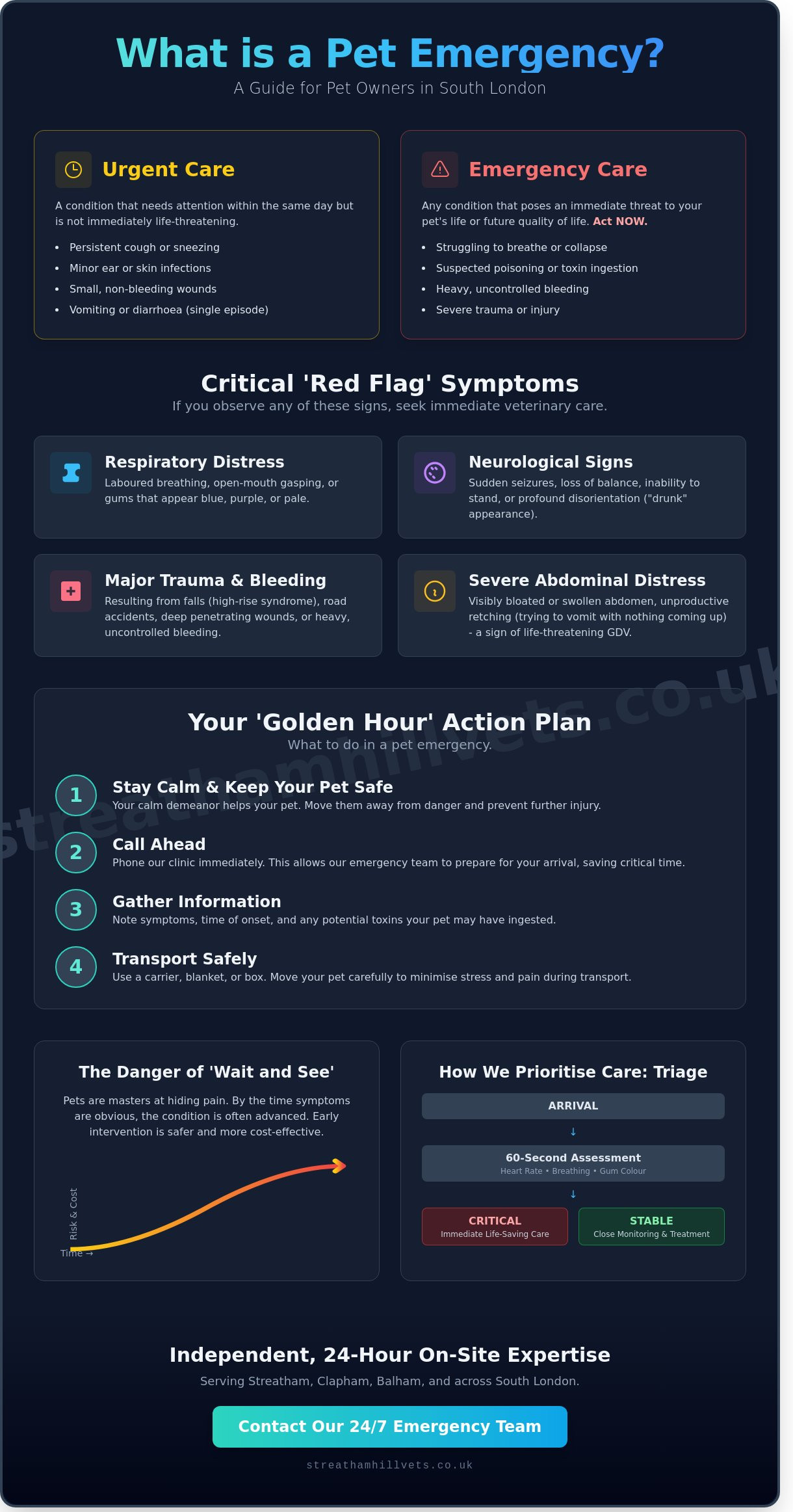
Understanding what is a pet emergency can be the difference between a swift recovery and a long-term health complication for your companion. In a clinical sense, an emergency is any sudden illness or injury that poses an immediate threat to your pet’s life or their future quality of life. At Streatham Hill Vets, we often see cases where minutes matter. This is why we focus heavily on the ‘Golden Hour’ concept. This 60-minute window following a trauma or the sudden onset of symptoms is when medical intervention is most effective at stabilising vital organs. Our veterinary professionals use this time to prevent shock and manage pain, which drastically improves survival rates for pets across South London.
It’s helpful to distinguish between ‘urgent’ and ’emergency’ care to help you decide on the next steps. An urgent situation involves a condition that needs attention within the same day, such as a persistent cough, a minor ear infection, or a small, non-bleeding wound. An emergency requires care this second. If your pet is struggling to breathe, has collapsed, or is showing signs of poisoning, it’s an emergency. If you are worried enough to ask what is a pet emergency, it’s always worth a phone call to our 24-hour emergency team. We would much rather reassure you over the phone than see a pet arrive too late for effective treatment.
Why ‘Wait and See’ is Rarely the Best Advice
Pets are masters at hiding discomfort. This is an evolutionary instinct to avoid appearing vulnerable to predators. By the time a cat or dog shows visible signs of distress, they are often already in a critical state. A minor bout of lethargy or a single episode of vomiting can sometimes mask internal trauma or a rapidly progressing toxicity. In our experience at our Streatham practice, early triage is consistently more cost-effective for owners. Addressing a problem in its infancy is far less intensive than treating advanced complications that require prolonged hospitalisation or complex emergency surgery.
The Role of Triage in Emergency Veterinary Care
Triage is the clinical process of prioritising patients based on the severity of their condition rather than their arrival time. When you arrive at our clinic, our team performs an initial 60-second assessment. We look at the ‘major piece’ parameters: heart rate, respiratory effort, and mucous membrane colour. This ensures that the most critical cases are rushed through for immediate life-saving care. If your pet is deemed ‘stable’ during this check, they will still be closely monitored by our nursing team while we attend to more life-threatening arrivals. This system ensures every animal in our care receives the specific level of attention they need to stay safe.
The ‘Red Flag’ Symptoms: When to Call an Emergency Vet Immediately
Recognising what is a pet emergency is the first step toward saving a life. While some health issues can wait for a scheduled appointment, “red flag” symptoms require an immediate response from our 24-hour clinical team. In our experience, we often see trauma resulting from road traffic accidents on busy South London thoroughfares or “high-rise syndrome,” where cats fall from balcony flats in areas like Clapham and Balham. These incidents, along with deep wounds or heavy bleeding, are clear crises that need professional stabilisation right away.
Neurological signs are equally distressing and urgent. If your pet experiences a sudden seizure, loses the ability to stand, or appears “drunk” and disoriented, it’s a sign of significant central nervous system distress. Similarly, abdominal distress in large dog breeds, characterised by unproductive retching or a visibly “bloated” appearance, is a life-threatening emergency known as GDV. Every minute counts in these scenarios to prevent permanent organ damage.
Respiratory and Cardiovascular Crises
Understanding what is a pet emergency often involves monitoring how your companion breathes. There’s a vital difference between a dog panting after a walk on Streatham Common and genuine respiratory distress. Laboured breathing, gasping for air with an open mouth, or gums that appear blue or purple (cyanosis) are critical indicators that your pet isn’t getting enough oxygen.
- Gum Colour: Healthy gums should be a “bubblegum” pink. If they appear pale or white, it’s often a sign of shock or internal haemorrhage.
- Cardiac Events: Sudden collapse or fainting episodes are never normal and require immediate diagnostic scanning to check for underlying heart conditions or internal masses.
Toxins and Poisons Found in South London
Urban environments present unique hazards for our pets. In communal garden areas across South London, rodenticides are a frequent danger, while antifreeze on driveways during winter months poses a lethal risk to cats. Many common household items are equally toxic; lilies are exceptionally dangerous for cats, while even small amounts of raisins, chocolate, or the sweetener xylitol can cause organ failure in dogs.
If you suspect your pet has ingested something harmful, you can find immediate guidance via the Animal Poison Control Center, but you must still contact us immediately. For rapid internal assessment of toxin damage or physical trauma, our team utilises advanced CT scanning services to guide our emergency surgery. As an independent practice, we’re proud to offer this high-level diagnostic care on-site, ensuring your pet doesn’t need to be moved during a crisis.
If you’re based in Streatham, Clapham or Balham and would like advice, our team is always happy to help, including 24-hour emergency care if needed.
Subtle Signs That Shouldn’t Be Ignored
Not every veterinary crisis begins with a visible wound or a dramatic accident. In our experience at Streatham Hill Vets, some of the most critical cases we treat start with quiet, easily missed changes in a pet’s daily routine. Understanding what is a pet emergency often requires looking past the obvious and noticing when your companion’s behaviour or physiology shifts unexpectedly. For instance, a pet that is shivering excessively or running a high fever may be fighting a silent but aggressive infection or suffering from the early stages of heatstroke, even if they aren’t panting heavily.
Persistent vomiting or diarrhoea should never be dismissed as just a “dodgy tummy,” especially when it’s accompanied by lethargy or a refusal to drink. These symptoms lead to rapid dehydration and can be caused by common household hazards for pets, such as toxic plants, human medications, or certain cleaning products. If your pet cannot keep fluids down for more than 12 hours, they require urgent clinical assessment to prevent organ stress and secondary complications.
The ‘Blocked’ Cat: A True Time-Sensitive Emergency
We frequently see male cats brought into our South London practice for what owners believe is constipation. In reality, they are often suffering from a urethral obstruction. This is a life-threatening scenario where the cat cannot pass urine, leading to a fatal buildup of toxins and potassium in the blood within 24 to 48 hours. You should watch for frequent, unproductive trips to the litter box, vocalising while straining, or excessive licking of their rear. Our 24-hour team manages these cases with immediate hospitalisation, using advanced diagnostics to stabilise the heart and clear the blockage safely. It’s a situation where every hour counts for a successful recovery.
Ocular Emergencies: Saving Your Pet’s Sight
Eye issues progress faster than almost any other condition we treat. A pet squinting, pawing at their face, or showing sudden cloudiness or a change in eye shape is often in significant pain. These signs can indicate a deep corneal ulcer or a sudden spike in internal eye pressure, both of which can lead to permanent blindness if not addressed within hours. Because we offer Advanced Surgery and Medicine, we can perform detailed corneal assessments and complex microsurgery right here in Streatham. When it comes to what is a pet emergency, the eyes are always a priority; early intervention is the only way to protect your pet’s vision and long-term comfort.
What to Do in a Pet Emergency: A Step-by-Step Guide
When you realize your companion is unwell, your adrenaline naturally spikes. However, pets are incredibly sensitive to our emotional states. In our experience, a pet often mirrors the anxiety of their owner. If you remain calm, your pet is more likely to stay settled, which keeps their heart rate and blood pressure stable during transport. Taking a deep breath helps you make better decisions and ensures you can provide the clear information our team needs to begin treatment.
Understanding what is a pet emergency often comes down to how you react in those first ten minutes. Beyond staying calm, there are practical steps you can take to improve the clinical outcome for your pet before you even reach our doors in Streatham Hill.
The Importance of Calling First
Always phone our surgery before setting off. This isn’t just about letting us know you’re coming; it’s a vital part of the triage process. While you’re in the car, our vets can provide immediate, life-saving advice over the phone, such as how to manage a wound or what to do if your pet’s breathing becomes laboured. By calling ahead, you ensure that our specialists and nurses are on standby, with the theatre prepared and oxygen equipment ready the moment you arrive. For immediate assistance, you can access our 24-hour emergency vetcare contact details at any time.
Transporting an Injured Pet Safely
Moving an animal in pain requires a gentle, methodical approach. For cats or small dogs, a sturdy carrier is essential to prevent them from bolting if they get spooked by the noise of South London traffic. If you suspect a spinal injury or a broken limb in a large, immobile dog, you can use a thick blanket or a piece of plywood as a makeshift stretcher to keep their body neutral.
It’s also vital to remember that even the gentlest family pet may bite when they’re in extreme pain. If it doesn’t interfere with their breathing, a temporary muzzle can keep everyone safe during the journey. When navigating the roads from Clapham or Balham, try to have someone else drive so you can focus entirely on monitoring your pet’s condition in the back seat.
If your pet is experiencing active bleeding, apply firm and continuous pressure with a clean cloth or bandage. In cases of seizures, do not try to restrain the animal or place anything in their mouth. Instead, clear away sharp furniture and dim the lights to reduce sensory stimulation. These small actions provide the best possible start to their recovery.
If you’re based in Streatham, Clapham or Balham and would like advice, our team is always happy to help, including providing 24-hour emergency care if needed.
Why Streatham Hill Vets is the Right Choice for Your Pet’s Crisis
Choosing where to take your pet during a medical crisis is a significant decision. At Streatham Hill Vets, we’re proud to be an independent, award-winning practice that puts clinical excellence above corporate targets. Because we aren’t part of a large commercial chain, our team has the freedom to make decisions based solely on what’s best for your animal. In our experience, this independence allows for a more personal, tailored approach to medicine that truly reflects the needs of our South London community.
We provide 24/7 on-site expertise every single day of the year. While some practices redirect “out of hours” calls to external providers in different postcodes, we have our own vets and nurses on-site 365 days a year. This ensures your pet receives immediate attention from a team that has access to their full medical history. Our facilities are designed for high-stakes situations, featuring in-house CT scanning and direct links to the Advanced Vetcare London (AVL) hospital. We manage the entire journey, from the moment you arrive in a panic to the final stages of hospitalisation and recovery.
Our Commitment to South London Pets
We’ve spent years building relationships with families in Streatham, Balham, and Clapham. Our team includes several certificate holders and specialists, meaning we can often treat complex emergencies in-house that other clinics might have to refer elsewhere. We also believe that the best way to handle a crisis is to prevent one. Our VIP Health Plan offers a 10% discount on many treatments and ensures your pet receives the regular diagnostic checks needed to catch underlying health issues early. When you’re trying to determine what is a pet emergency, having a vet who knows your pet’s “normal” baseline is invaluable.
Peace of Mind for Pet Owners
We know how overwhelming it feels when your companion is unwell. Our team focuses on transparent pricing and clear, jargon-free communication so you’re never left in the dark about costs or treatment plans. We treat every pet as if they were our own, combining surgical precision with a gentle, compassionate bedside manner. If you’re based in Streatham, Clapham or Balham and would like advice, our team is always happy to help; including 24-hour emergency care if you’re ever worried about what is a pet emergency. We’re always here when you need us most.
Protecting Your Companion With Expert South London Care
Understanding what is a pet emergency helps you act with confidence when your companion needs you most. Whether you’ve spotted a subtle change in their routine or a more obvious red flag, trusting your intuition is a vital part of being a responsible owner. In our experience, we often see that seeking professional advice early leads to much better clinical outcomes and provides much-needed peace of mind.
As a multi-award-winning independent practice, we provide a level of care that combines advanced technology with a personal touch. Our Streatham clinic is equipped with sophisticated diagnostics including in-house CT scanning; furthermore, our own veterinary team is on-site 24 hours a day to help. We don’t believe in redirecting you to unfamiliar clinics during a crisis. Instead, we offer the continuity of care that your pet deserves in a familiar, local environment.
If you have a pet emergency in South London, call us immediately on our 24-hour line for expert assistance. If you’re based in Streatham, Clapham or Balham and would like advice, our team is always happy to help.
Frequently Asked Questions
How do I know if my dog’s breathing is an emergency?
Breathing difficulties are always an immediate priority in our Streatham clinic. If your dog’s chest is moving more than 30 times per minute while they’re resting, or if you notice their tongue or gums turning a blueish hue, you should contact us immediately. These signs often indicate a lack of oxygen or fluid in the lungs, which constitutes a clear pet emergency that requires rapid clinical intervention.
In our experience, we often see pets who are struggling to inhale or making loud, rasping noises. Don’t wait for these symptoms to resolve on their own, as respiratory distress can escalate within minutes. Our 24-hour team is equipped with oxygen therapy and advanced diagnostics to support your dog the moment you arrive.
Is vomiting always a pet emergency?
A single episode of vomiting isn’t always a crisis, but frequent vomiting or unproductive retching is a serious concern. If your pet vomits more than three times in a 24-hour period or appears lethargic and dehydrated, it’s time for an urgent check at our hospital. We’re particularly concerned if the vomit contains blood or if your pet’s abdomen feels hard and painful.
Retching without producing anything is particularly dangerous in large breeds; it can signal a life-threatening gastric torsion. Our clinicians use in-house imaging to quickly determine if there’s an obstruction or a more complex underlying issue. Early intervention often leads to a much better outcome for your beloved companion.
What should I do if my pet eats something poisonous at night?
You should call our 24-hour emergency team immediately if you suspect your pet has ingested something toxic after hours. We recommend keeping any packaging or a sample of the substance to help our clinicians identify the toxin quickly. Timing is vital; many common household items like chocolate, raisins, or lilies can cause irreversible organ damage within just a few hours if not treated with emetics or charcoal.
Our South London hospital has constant access to toxicology databases to provide the most accurate treatment protocols. Because we’re an independent practice with staff on-site all night, we can start life-saving treatment the moment you reach us. We’ll guide you through the initial steps over the phone to keep your pet stable during the journey.
Can I wait until my regular vet opens in the morning?
Waiting until the morning can be life-threatening for conditions like urinary blockages, severe trauma, or breathing issues. Understanding what is a pet emergency helps you decide when to act; we always advise calling our South London team for guidance if you’re unsure. As an independent practice with 24-hour availability, we’re here to provide peace of mind regardless of the time.
If your pet is in pain or showing signs of distress, delaying care only prolongs their discomfort and can make the eventual treatment more complex. Our Streatham Hill team provides continuity of care, ensuring that your pet’s medical records are updated and shared with your regular vet if you’re visiting us from another practice.
How much does an emergency vet visit cost in London?
Emergency consultation fees in London are typically higher than standard daytime appointments to cover the specialised staffing and facilities required for overnight care. While specific costs vary depending on the complexity of the treatment required, we’re always transparent about our fees before starting any procedures. We’ll provide a clear estimate after the initial assessment so you can make an informed decision for your pet.
Members of our Healthcare Plan benefit from a 10% discount on many of our services, which can help manage the costs of unexpected urgent care. We believe every pet deserves the best medical attention, and we work closely with owners in Streatham, Clapham, and Balham to provide the most appropriate care for their situation.
What are the signs of shock in a cat or dog?
Signs of shock include extremely pale or white gums, a rapid but weak pulse, and paws that feel cold to the touch. Your pet may also appear dazed, struggle to stand, or have a very slow capillary refill time when you press on their gums. Shock is a progressive condition that requires immediate stabilisation at our hospital to prevent multi-organ failure.
In our experience, shock often follows trauma, severe allergic reactions, or internal bleeding. Our multi-award-winning team uses advanced monitoring and intravenous fluid therapy to support the circulatory system. Rapidly identifying these signs at home can be the difference between a successful recovery and a critical situation.
Do I need an appointment for a 24-hour emergency vet?
You don’t need a pre-booked appointment for our emergency service, but we ask that you phone us on your way to the clinic. This allows our veterinary surgeons and nurses to prepare the necessary equipment, such as oxygen tanks or surgical kits, before you arrive. In a busy South London practice, this brief heads-up ensures we can triage your pet the moment they come through our doors.
We prioritise cases based on clinical urgency, much like a human A&E department. While there may be a wait for less critical issues, we’ll always keep you informed of the timeline. Our goal is to provide a calm, professional environment where your pet receives the highest level of care as quickly as possible.
What happens if my pet needs to stay in the hospital overnight?
If your pet requires hospitalisation, they’ll be monitored throughout the night by our dedicated on-site veterinary team. We provide comfortable bedding, intravenous fluids, and regular pain relief assessments to ensure their recovery is as gentle as possible. Because we’re a 24-hour hospital, your pet won’t be left alone, and you’ll receive regular updates on their clinical progress from our staff.
Our facility includes the Advanced Vetcare London (AVL) referral hospital, meaning your pet has access to specialists and advanced diagnostics like CT and MRI if needed. We treat every pet as an individual, ensuring they feel safe and loved while they’re away from home. Our team’s priority is both the well-being of the animal and the comfort of the owner during a stressful time.