
Last Tuesday evening, a local owner in Balham noticed their tabby, Jasper, was resting on the sofa but his chest was moving with an unusual, rapid rhythm. It’s a deeply unsettling sight that leaves any dedicated pet owner feeling torn between the hope that it’s nothing and the fear that it’s a crisis. If you’re currently watching your cat breathing fast, a London vet is often the only person who can provide the definitive answers you need during such an anxious time. You want to protect your companion, but navigating the uncertainty of whether a symptom is serious enough for a late-night trip can be overwhelming.
We’ve written this guide to help you understand exactly what constitutes a veterinary emergency and how to identify the subtle signs of respiratory distress before they escalate. You’ll learn how to accurately monitor your pet’s breathing rate and why certain patterns require immediate clinical intervention. We’ll also explain how our independent, 24-hour Streatham surgery uses advanced diagnostics and expert care to support your pet, ensuring they receive the best possible outcome in a familiar, local environment.
Key Takeaways
- Learn to distinguish between rapid and laboured breathing, as cats are masters of disguising respiratory distress until it becomes a critical emergency.
- Discover the common triggers for breathing difficulties in South London cats, ranging from urban feline asthma to underlying cardiac conditions.
- Master the correct technique for measuring your cat’s Resting Respiratory Rate (RRR) at home to provide our clinical team with vital health data.
- Understand the essential first-aid steps and safe transport methods when visiting a cat breathing fast london vet at our 24-hour Streatham surgery.
- See how advanced in-house diagnostics, including CT scanning, allow our independent team to provide rapid, life-saving answers for your companion.
Recognising Respiratory Distress: Is Your Cat Breathing Too Fast?
Seeing your cat breathing fast can be an incredibly distressing experience for any owner. At Streatham Hill Vets, we understand the deep bond you share with your feline companion and how worrying it is when their health seems fragile. Cats are notoriously stoic animals. They’ve evolved as masters of disguise, often hiding clinical signs of pain or respiratory distress until a condition is quite advanced. This survival instinct means that by the time you notice a change in their breathing, your pet likely needs professional help from a cat breathing fast london vet.
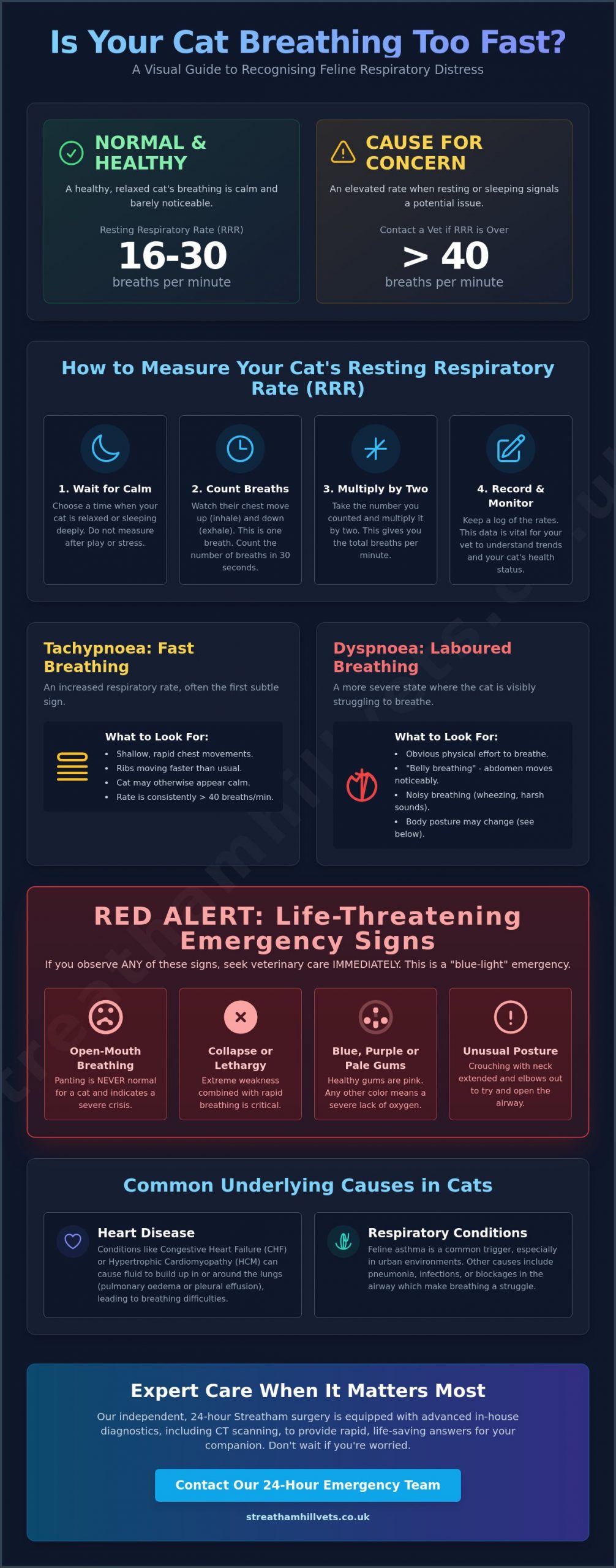
We categorise breathing issues into two main types. Tachypnoea is a medical term for an increased respiratory rate. A healthy, relaxed cat typically takes between 16 and 30 breaths per minute. If you count more than 40 breaths per minute while your cat is resting or sleeping, it’s a clear signal that something is wrong. Dyspnoea is more severe; it describes laboured breathing where the cat is visibly struggling or putting in significant physical effort to move air into their lungs. In our experience, both conditions require a swift clinical assessment to determine the underlying cause.
It’s vital to remember that mouth breathing or panting is never normal for a cat. While dogs pant to cool down after a walk in Tooting Common, a cat doing the same is almost always in a state of crisis. Whether it’s due to heatstroke, heart failure, or Feline asthma, open-mouth breathing is a major red flag that requires immediate intervention from our expert team.
The Difference Between Fast and Laboured Breathing
Tachypnoea often involves shallow, rapid movements of the chest wall. You might notice the ribs moving much faster than usual, even though the cat appears to be resting quietly. Dyspnoea, or laboured breathing, looks much more intentional and taxing. You’ll often see “belly breathing,” where the abdominal muscles are recruited to help the diaphragm move. This extra effort is a sign that the body isn’t getting enough oxygen. Both presentations are serious, and we recommend seeking an urgent appointment at our South London practice if you notice either.
When Rapid Breathing Becomes a 24-Hour Emergency
Certain symptoms indicate a life-threatening “blue-light” emergency. If your cat’s gums appear blue, purple, or extremely pale instead of a healthy bubblegum pink, they’re likely suffering from a severe lack of oxygen. Collapse or extreme lethargy combined with fast breathing is equally critical. You should also look for the “orthopneic position.” This is a specific posture where a cat crouches with its neck extended and elbows turned outwards to make it easier to expand the chest.
As an independent, multi-award-winning practice, we provide around-the-clock support for pets in Streatham, Clapham, and Balham. If your cat is showing these signs, don’t wait for a scheduled appointment. Contact our 24-hour emergency vetcare team immediately. We have onsite CT scanning and advanced diagnostic facilities to provide the rapid, life-saving care your beloved companion deserves.
Common Causes of Rapid Breathing in South London Cats
Seeing your cat breathing fast is often the first sign that something isn’t right. In our experience across Streatham, Clapham, and Balham, rapid respiration, or tachypnea, usually stems from a few specific clinical areas. While some causes develop slowly over months, others can appear with frightening speed, requiring an immediate visit to a cat breathing fast london vet. Recognising the difference between a temporary pant after play and a genuine medical crisis is vital for your pet’s safety.
Heart Disease and Fluid Accumulation
Congestive Heart Failure (CHF) is a frequent cause of respiratory distress in the cats we treat. This often results from Hypertrophic Cardiomyopathy (HCM), a condition where the heart muscle thickens, making it harder for the heart to pump blood effectively. This inefficiency causes fluid to leak into the lungs, known as pulmonary oedema, or into the chest cavity, known as pleural effusion. These conditions are notoriously silent. Many owners don’t realise their pet has an underlying heart issue until a breathing crisis occurs. At our practice, we utilise the expertise of our Advanced Vetcare London (AVL) specialists, who use high-definition CT scanning and advanced cardiac diagnostics to manage these complex cases. We’ve found that early intervention can significantly improve long-term comfort for cats with cardiac concerns.
Environmental Triggers and Feline Asthma
The urban environment of South London presents unique challenges for feline respiratory health. Poor air quality, household dust, and even certain cleaning products can trigger feline asthma or inflammatory airway disease. We often see owners who describe their cat having a “crouched cough,” where the cat stretches its neck out low to the ground. This is frequently mistaken for a stubborn hairball, but it’s actually a sign of Recognising Respiratory Distress. Managing these environmental triggers is a key part of our preventative healthcare plans, which help keep your companion’s airways clear and reduce the risk of sudden spikes in breathing rates.
Trauma and High-Rise Syndrome
Living in London flats and apartments introduces a specific risk known as high-rise syndrome. Even the most agile cats can lose their balance on a balcony or windowsill, especially during the warmer months when windows are left open. Falls often result in blunt force trauma to the chest, leading to a collapsed lung or internal bleeding. These are life-threatening emergencies that cause a cat to breathe rapidly and shallowly. Because we’re an independent, multi-award-winning practice with 24-hour emergency availability, we’re equipped to provide immediate stabilising care and advanced imaging for these urgent cases. If you’re concerned about your pet’s breathing, you can book an urgent consultation online or call our team directly for advice.
How to Measure Your Cat’s Resting Respiratory Rate (RRR)
Resting respiratory rate serves as the most sensitive home-monitoring tool for your cat’s heart health. By tracking how many times your cat breathes while they’re at rest, you can often spot subtle changes in their clinical condition before a crisis occurs. In our experience, owners who monitor this regularly are much better equipped to help us manage chronic conditions like feline heart disease.
To get an accurate reading, you must wait until your cat is in a deep, peaceful sleep or completely relaxed. It is vital they aren’t purring, as the vibration of a purr changes their breathing pattern and makes counting impossible. You should observe the rise and fall of the chest; one full rise and fall equals one single breath. We recommend following these steps:
- Ensure the room is quiet and your cat has been resting for at least 20 minutes.
- Count the number of breaths taken over a 30-second period.
- Multiply that number by two to get the total breaths per minute (bpm).
- Repeat this process over several days to establish your cat’s unique “normal” baseline.
A healthy cat should have a normal threshold consistently under 30 breaths per minute. If you find your cat breathing fast, a London vet at our Streatham practice can perform a thorough assessment to rule out underlying issues. It’s quite common for a cat’s rate to spike if they’re dreaming or if the room is warm, so we always look for a pattern of elevated readings rather than one isolated event.
Interpreting the Results: When to Call the Vet
If you record a rate consistently between 30 and 40 breaths per minute, we recommend booking an urgent health check. This range is often a “grey zone” that suggests your cat’s heart or lungs may be starting to struggle. When the rate exceeds 40 breaths per minute, this is a clinical emergency. You should contact our 24-hour team at Streatham Hill Vets immediately. Navigating a Cat Respiratory Emergency requires fast action, as high rates can indicate fluid build-up in or around the lungs. Remember that a single high reading while your cat is awake, playing, or purring is far less concerning than a high RRR during deep sleep.
Keeping a Breathing Diary for Chronic Cases
For cats diagnosed with heart or lung disease, keeping a daily breathing diary is one of the most helpful things you can do. These logs help our vets adjust medications like diuretics or bronchodilators with much greater accuracy. If your cat needs long-term medication, our VIP Health Plan offers a 10% discount on medications, helping to make ongoing care more affordable. We also suggest using your smartphone to video your cat’s breathing. Showing a 30-second clip to the vet during a consultation provides us with invaluable visual evidence of their respiratory effort and rhythm, which is often more telling than a physical exam alone in a stressed cat.
Navigating a Cat Respiratory Emergency in South London
When you notice your cat breathing fast, the journey to a London vet becomes a race against time, but speed shouldn’t come at the cost of composure. The most critical first aid you can provide for a gasping cat is a quiet and calm environment. In our experience, stress causes a surge in adrenaline, which increases oxygen demand and can push a struggling cat into full respiratory failure. We recommend placing your cat in a secure, sturdy carrier and covering it with a light towel to reduce visual stimuli. It’s vital to ensure your car is pre-cooled; even a mild London afternoon can make a vehicle interior uncomfortably warm, further taxing your pet’s lungs. You don’t need to wait for your regular daytime practice to open or for a referral to be processed. As an independent, award-winning practice, we provide 24-hour emergency care directly. If your cat is distressed at 3:00 am, our doors are already open.
Getting to Streatham Hill Vets Quickly
Navigating the A23 or the South Circular during a crisis can be daunting. If you’re travelling from Brixton, follow the A23 south toward Streatham Hill station; from Balham or Clapham, the A205 South Circular provides the most direct link to our practice. You can find precise directions and parking information on our Find Us page. Our 24/7 team is always on-site, so we’re briefed and ready the moment you call to say you’re on your way. We operate as a dedicated emergency hub, meaning our clinicians are specifically trained for high-pressure respiratory cases.
What to Expect Upon Arrival
Upon arrival, your cat will undergo immediate triage. We prioritize respiratory cases to ensure they receive care without delay. The first step is often stabilising your cat with oxygen therapy, which may involve a specialized oxygen kennel or a gentle mask. This allows them to settle while our clinicians perform a physical assessment. If your pet requires more intensive support, our facility is equipped for hospitalisation, where they’ll be monitored around the clock by our dedicated night team. This continuity of care is a hallmark of our independent practice, ensuring your cat breathing fast is seen by a London vet team that stays with them every step of the way.
If you’re worried about your pet’s breathing, please contact our emergency vets immediately.
Advanced Diagnostics at Streatham Hill Veterinary Surgery
We are proud to be an independent, multi-award-winning South London practice. Being vet-owned means we put your cat’s welfare at the heart of every decision, focusing entirely on clinical excellence rather than corporate targets. When you are worried about a cat breathing fast london vet intervention needs to be swift and precise. Our team provides a seamless journey of care, from the initial emergency stabilisation in our triage area to advanced diagnostic imaging and specialist referral if required.
In our experience, respiratory distress is often a symptom of complex underlying issues that require more than a simple physical exam. Having immediate access to CT scanning within our surgery is a significant advantage for our patients. This technology allows our clinicians to see detailed, cross-sectional images of the lungs and chest cavity in seconds. Our team includes dedicated certificate holders in internal medicine and cardiology who possess the expertise to interpret these complex scans and create tailored treatment plans for your pet.
Specialist Equipment for Feline Patients
We’ve invested in high-level tools because cats require a delicate and highly specific approach to medicine. Our in-house CT and MRI access is a game-changer for diagnosing complex lung issues such as chronic fibrosis, pleural effusions, or hidden masses that may be causing your pet’s rapid breathing. For heart assessments, we use high-definition digital radiography and cardiac ultrasound to measure heart function and blood flow in real time. If your companion requires high-level surgery, our Advanced Vetcare London (AVL) hospital provides a sterile, specialist environment for the most intricate thoracic procedures.
Why Our Independent Status Matters for Your Cat
Our independence allows us to treat every patient as an individual family member. We aren’t bound by rigid corporate protocols, which means our vets have the freedom to recommend the best possible path for your specific situation. As a “Cat Friendly Clinic” accredited practice, we understand that a cat breathing fast london vet visit is often a high-stress event for both the pet and the owner. We use pheromone diffusers, quiet wards, and gentle handling techniques to keep your cat as calm as possible during their stay.
This empathetic approach is combined with the clinical rigour you would expect from a leading London hospital. We maintain a steady, methodical rhythm of care, ensuring you are kept informed at every stage of your cat’s diagnosis and recovery. Whether it’s a routine check-up or a middle-of-the-night respiratory emergency, our commitment to your pet’s health remains the same. We take immense pride in being a trusted part of the local community, combining the precision of a modern hospital with the warmth of a family vet.
Protecting Your Companion’s Respiratory Health
Identifying a cat breathing fast is often the first step in preventing a serious health crisis. By monitoring your pet’s resting respiratory rate at home, you can spot subtle changes before they become life-threatening emergencies. In our experience at Streatham Hill Vets, early intervention leads to much better outcomes for our feline patients. As an independent, multi-award-winning practice, we provide the high-level care your companion deserves without the corporate feel. We’ve invested in advanced in-house diagnostics, including CT and MRI scanners, to ensure we find the root cause of any breathing difficulty quickly and accurately.
Whether it’s a routine check or a sudden worry about your cat breathing fast london vet teams like ours are here to provide clinical expertise and peace of mind. Our 24-hour emergency service operates 365 days a year, so you’re never alone when your pet needs help. If you’re based in Streatham, Clapham, or Balham and would like advice, our team is always happy to help. If your cat is struggling to breathe, call our 24-hour emergency line immediately. We’re dedicated to getting your beloved pet back to their happy, healthy self as soon as possible.
Frequently Asked Questions
Is it normal for a cat to breathe fast after playing or in the heat?
It is rarely normal for a cat to breathe fast, even after vigorous play or during a London heatwave. While dogs pant to regulate their temperature, cats typically maintain a steady respiratory rate of 20 to 30 breaths per minute. In our experience, we often see that rapid breathing in these situations indicates underlying heatstroke or a heart condition. If your pet doesn’t settle within a few minutes of resting in a cool spot, please contact our team.
What should I do if my cat is panting like a dog?
You should treat a panting cat as a clinical emergency and contact an emergency cat breathing fast london vet immediately. Open-mouthed breathing is a sign of significant respiratory distress and is never a standard behavior for felines. Keep your companion calm and cool while you call us. We provide 24-hour emergency care at our Streatham Hill site, ensuring your pet sees an expert clinician without any delay, regardless of the hour.
How much does an emergency vet consultation cost in London?
Emergency consultation fees in London vary depending on the time of day, but typically range from £150 to £300 for out-of-hours assessments. These fees cover the immediate clinical evaluation by our multi-award-winning team. For our regular clients, the Streatham Hill Vets Healthcare Plan offers a 10 percent discount on many services. This helps manage the costs of high-quality, independent veterinary care during those unexpected and stressful moments.
Can stress cause a cat to breathe rapidly during a vet visit?
Stress can certainly cause a temporary increase in a cat’s respiratory rate during a visit to the surgery. In our experience, we often see “stress tachypnoea” where the heart rate and breathing spike due to the car journey or a new environment. Our team uses gentle handling techniques to minimize this anxiety. We always work to distinguish this from genuine pathology, such as feline asthma, through careful observation and our advanced diagnostic tools.
What is the fastest way to get my cat to an emergency vet in South London?
The fastest way to reach an emergency vet in South London is to call our 24-hour line at Streatham Hill Vets before you set off. This allows our surgical team to prepare for your arrival while you travel safely with your pet in a secure carrier. We are conveniently located for pet owners in Streatham, Clapham, and Balham. Being an independent practice, we stay open on-site every night so you won’t be redirected elsewhere.
What are the first signs of heart failure in cats?
The first signs of heart failure in cats often include subtle lethargy, a reduced appetite, or a cat breathing fast while they are resting. You might notice their chest or abdomen moving more prominently with every breath. In approximately 50 percent of feline cardiac cases, the first obvious symptom is a sudden onset of breathing difficulty. Our Advanced Vetcare London referral hospital uses in-house CT and specialized imaging to quickly diagnose these heart conditions.
Do I need to be a registered client to use your 24-hour emergency service?
You don’t need to be a registered client to access our 24-hour emergency services. We believe every pet in our South London community deserves immediate, expert care when they are in distress. While our registered members enjoy discounts on preventative care, our doors are open to all neighbors in Streatham, Clapham, and Balham. We provide full continuity of care and will share all medical records with your usual vet the following morning.