
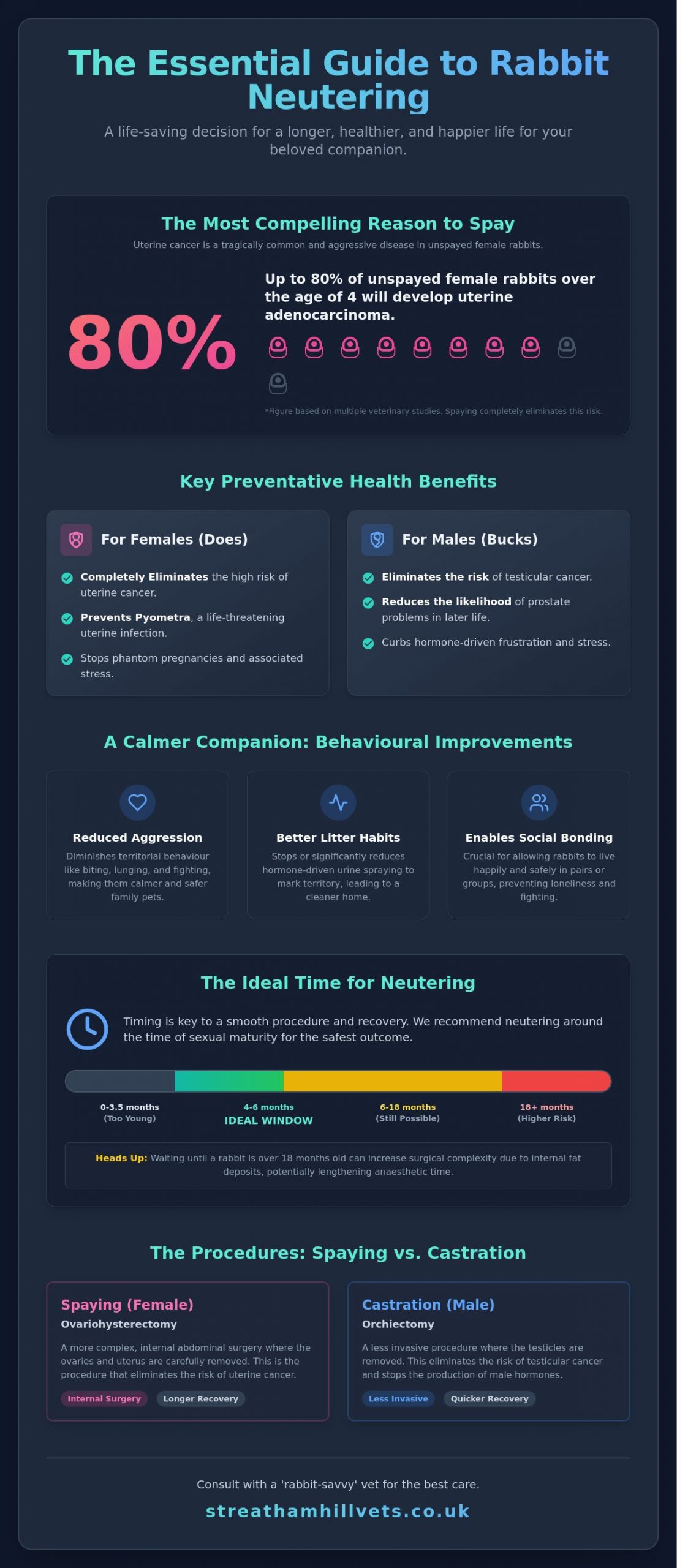
Did you know that up to 80% of unspayed female rabbits over the age of four will develop uterine cancer? It’s a staggering figure, and one that highlights how a single preventative procedure can be truly life-saving for these beloved family members.
We understand that the thought of any surgery for a small, delicate pet can be worrying. Concerns about anaesthetic safety, the right age for the procedure, and the risk of post-operative complications like gut stasis are completely valid, and questions we hear from caring owners across South London every week. That’s why we’ve created this complete 2026 guide to give you total peace of mind by demystifying the entire rabbit neutering process, from the profound health benefits to our meticulous approach to surgical safety right here at our Streatham Hill practice.
In the sections below, we’ll walk you through exactly what to expect, share our expert tips for a smooth recovery, and answer all your most pressing questions to ensure your rabbit lives a long, calm, and healthy life.
Key Takeaways
- Learn how neutering can dramatically reduce the risk of life-threatening uterine cancer and other serious health conditions in female rabbits.
- Understand our specialised ‘rabbit-savvy’ approach to surgery and what to expect during your pet’s pre-operative health check at our Streatham clinic.
- Receive practical, step-by-step guidance for post-operative care at home, including how to create a safe recovery space and monitor the healing wound.
- Feel confident in your decision by learning why choosing an experienced, independent vet is so important for a successful rabbit neutering procedure.
Understanding Rabbit Neutering: An Essential Guide for Streatham Owners
Deciding to neuter your beloved rabbit is one of the most powerful, positive steps you can take for their long-term health and happiness. Here in South London, we’ve seen a wonderful increase in families welcoming rabbits into their homes as cherished companions. With this has come a greater awareness of the importance of preventative healthcare, and rabbit neutering is at the very top of that list. Unlike cats and dogs, rabbits have a unique and delicate physiology that demands a specialised surgical approach. Understanding domestic rabbits, from their complex digestive systems to their specific anaesthetic needs, is fundamental to ensuring a safe and successful outcome.
At Streatham Hill Veterinary Surgery, our independent, award-winning practice is built on a foundation of “rabbit-savvy” care. We don’t just adapt canine or feline protocols; we implement surgical and aftercare plans designed specifically for the needs of your bunny. This commitment ensures we can provide the highest standard of care and give you complete peace of mind.
Spaying vs. Castration: What is the Difference?
The term ‘neutering’ covers both male and female procedures, but the surgeries themselves are different. For a female rabbit (a doe), the procedure is an ovariohysterectomy, commonly known as a ‘spay’. This is a more complex internal surgery involving the careful removal of her ovaries and uterus. For a male rabbit (a buck), the surgery is a castration, where the testicles are removed. This is a less invasive procedure with a typically shorter recovery period. At our Streatham surgery, both operations are considered routine, but we treat every single one with the meticulous attention it deserves, recognising that every pet is a treasured member of your family.
The Ideal Age for Neutering Your Rabbit
Timing is a key factor for a smooth procedure. Most rabbits reach sexual maturity between four and six months of age, with smaller breeds sometimes maturing as early as 3.5 months. We strongly recommend scheduling the procedure around this time. Waiting until your rabbit is over 18 months old can increase surgical complexity, as older rabbits often develop significant internal fat deposits around their reproductive organs. This can make the surgery more challenging and potentially lengthen anaesthetic time. For our neighbours in Balham and Brixton, we advise booking an initial consultation with us shortly after you bring your young rabbit home. This allows our team to assess their health and establish the perfect timeline for their neutering procedure, ensuring everything is done at the safest and most effective time.
This article is intended for general guidance only. If you have any concerns about your rabbit’s health or behaviour, please contact us for a professional consultation.
Why Neutering is Vital for Your Rabbit’s Health and Behaviour
Deciding to neuter your rabbit is one of the most significant and loving choices you can make for their long-term wellbeing. Far from being an optional procedure, it is a cornerstone of responsible rabbit care that directly impacts their health, happiness, and ability to live harmoniously with you and other rabbits. At Streatham Hill Vets, we consider this a fundamental part of preventative healthcare, protecting your beloved companion from future pain and distress.
The benefits extend far beyond preventing unwanted litters. This simple procedure addresses deep-seated hormonal instincts that can cause serious health complications and challenging behaviours. It is the key to unlocking a calmer, healthier, and longer life for your pet.
Preventing Uterine Cancer and Other Health Risks
For female rabbits (does), the health argument for spaying is incredibly compelling. A shocking statistic reveals that up to 80% of unspayed female rabbits will develop uterine adenocarcinoma, a malignant cancer of the uterus, by the age of five. This disease is aggressive and often fatal if not caught in its earliest stages. Spaying involves removing the uterus and ovaries, completely eliminating this risk. It also prevents other life-threatening conditions like pyometra, a severe uterine infection. Leading UK experts at the Rabbit Welfare Association & Fund strongly advocate for neutering as an essential health measure.
For male rabbits (bucks), castration eliminates the risk of testicular cancer and reduces the likelihood of prostate problems. While the initial cost of the procedure is a consideration, this single investment prevents the need for far more complex and expensive emergency treatments down the line, offering you both financial and emotional peace of mind.
Improving Temperament and Social Bonding
Hormones are powerful drivers of rabbit behaviour. An unneutered rabbit is often ruled by its instincts to defend territory and reproduce, which can manifest in ways that are difficult to manage in a home environment. The benefits of rabbit neutering on behaviour are transformative:
- Reduced Aggression: Hormonal rabbits can be territorial, lunging, biting, or growling at their owners or other pets. Neutering significantly calms these aggressive tendencies, making them gentler and easier to handle.
- Better Litter Habits: Spraying urine to mark territory is a common issue in unneutered rabbits of both sexes. Once neutered, most rabbits become much more reliable with their litter tray.
- A Happier Companion: Without the constant stress of hormonal urges, neutered rabbits are typically more relaxed, affectionate, and content. They can focus on bonding with you and enjoying their environment.
Crucially, neutering is non-negotiable for rabbits intended to live in pairs or groups. Rabbits are social animals that thrive with a companion, but attempts to bond unneutered rabbits almost always result in severe, often dangerous, fighting. Neutering is the golden key to a successful and peaceful bond. If you’re hoping to find a friend for your rabbit, our team can provide advice on how to prepare for a successful introduction.
What Happens During the Procedure at Streatham Hill Vets
Entrusting your beloved rabbit to us for surgery is a decision we take very seriously. We understand the anxiety that can come with any procedure, which is why we’ve built our entire surgical protocol around a “rabbit-savvy” philosophy. Rabbits are not small cats or dogs; their unique physiology requires specialised knowledge, equipment, and a gentle, quiet approach. From the moment you arrive at our Sternhold Ave surgery, our focus is on ensuring your pet’s safety, comfort, and a smooth recovery.
Your rabbit’s journey begins with a thorough pre-operative health check. This allows our veterinary team to assess their fitness for anaesthesia, listen to their heart and lungs, and discuss any specific needs with you. This vital step ensures we can tailor the entire rabbit neutering process to your pet’s individual health profile, giving you complete peace of mind.
Pre-Operative Preparation: No Fasting Required
Unlike other pets, rabbits must NEVER be fasted before surgery. Their delicate digestive systems need to keep moving constantly to prevent a serious condition called gut stasis. This is a golden rule for rabbit care, and you can find more detailed pre-operative advice in the excellent Rabbit Welfare Association & Fund guide to neutering. Instead, we encourage you to pack a small “hospital bag” for them:
- A handful of their favourite, good-quality feeding hay.
- A small portion of their most-loved fresh leafy greens (like parsley or kale).
- Their usual pelleted food.
On the morning of the procedure, if you’re travelling from nearby areas like Clapham or Tooting, please ensure their carrier is secure and lined with a familiar blanket to minimise stress during the journey. A calm arrival helps ensure a calm start to their day with us.
Advanced Surgical Safety and Pain Management
Anaesthesia for rabbits requires exceptional care. Their small, delicate airways are managed using specialised equipment, including v-gels or endotracheal tubes, to ensure they receive a stable flow of oxygen and anaesthetic throughout the procedure. We use modern, safe anaesthetic gases that allow for a rapid and gentle recovery once the surgery is complete. During the entire process, your rabbit is monitored closely by our dedicated veterinary nurses using advanced equipment that tracks their heart rate, breathing, oxygen levels, and blood pressure in real-time.
A comfortable recovery is just as important as a safe surgery. We use a “multimodal” pain relief strategy, which means we combine different types of pain medication before, during, and after the procedure. This proactive approach manages discomfort from every angle, ensuring your rabbit wakes up feeling as calm and pain-free as possible. Our team, highly experienced in small-animal theatre, is dedicated to making the entire experience from admission to discharge a positive one for both you and your pet.
Post-Operative Care: Helping Your Rabbit Recover at Home
Bringing your beloved companion home after their procedure is a moment of great relief. We understand that the first 24 to 48 hours are the most critical for a smooth recovery, and our team is here to support you every step of the way. Your role in providing a calm, clean, and comfortable environment is absolutely vital to ensuring your rabbit heals quickly and safely.
When you collect your rabbit, they will still be a little drowsy from the anaesthetic. Prepare a small, warm, and quiet recovery space for them at home, away from the hustle and bustle of family life. A single-level indoor cage or a puppy pen lined with soft towels is perfect. Monitor the surgical site at least twice a day. A healthy wound should look clean and dry with minimal redness or swelling. Some slight bruising is normal, but there should be no discharge, bleeding, or unpleasant odour.
We will provide you with pain relief medication, which is typically a liquid administered orally. It’s essential to give this exactly as prescribed, even if your rabbit seems comfortable. Rabbits are masters at hiding pain, and consistent pain management is key to encouraging them to eat and move, which is crucial for their recovery after rabbit neutering.
Preventing Gut Stasis: The Critical First Day
The single most important goal after surgery is to get your rabbit eating. An empty gut can quickly lead to a life-threatening condition called gastrointestinal (GI) stasis, where their digestive system slows down or stops completely. You must tempt them with their favourite foods as soon as they are home. Offer fresh, fragrant herbs like parsley or coriander, high-quality hay, and their usual pellets. Watch for these signs of GI stasis:
- Refusing all food and water
- Lack of faecal pellets for more than 8-10 hours
- Sitting hunched in a corner or showing signs of pain
- Lethargy and unwillingness to move
If your rabbit isn’t eating within a few hours, you may need to start syringe feeding with a special recovery formula we can provide. Gentle encouragement to hop around their confined space for a few minutes every hour also helps to stimulate gut motility.
Managing the Recovery Environment
A clean environment prevents infection. For the first 7-10 days, swap any loose bedding like wood shavings or straw for soft towels or fleece blankets. This stops particles from sticking to the incision site. During London’s warmer months (typically May to September), it’s also critical to protect your rabbit from flystrike by keeping them indoors until the wound is fully healed. Flies are attracted to surgical sites and can lay eggs, leading to a dangerous maggot infestation.
If your rabbit is part of a bonded pair, they will need to be separated temporarily. This prevents their companion from licking or nibbling at the stitches, which can cause serious complications. You can maintain their bond by placing their enclosures side-by-side where they can see and smell each other without physical contact.
This article is intended for general guidance only. We understand the recovery period can feel daunting, and close observation is key. If you have any concerns at all about your rabbit’s behaviour or the appearance of their wound, please don’t hesitate to contact our Streatham Hill team for support. Our 24-hour service means we are always here for you and your pet.
Choosing the Right London Vet for Your Rabbit’s Surgery
Deciding on a surgical procedure for your beloved rabbit is a significant step, and we know that your primary concern is their safety and comfort. Entrusting their care to the right veterinary team is paramount. At Streatham Hill Vets, we don’t see our work as a transaction; we see it as a partnership built on trust, expertise, and a genuine love for animals. Our status as a multi-award-winning, independent surgery isn’t just a title, it’s a promise. It means every decision we make is guided by the best interests of your pet, not by corporate policy, ensuring a personal and dedicated approach to their care.
One of the greatest anxieties for any pet owner is the ‘what if’. What if your rabbit seems unwell in the middle of the night after their procedure? Our commitment to your peace of mind extends around the clock. We provide our own 24-hour emergency vetcare, staffed by our own team, so you’ll always have access to professionals who understand your pet’s history. There’s immense reassurance in knowing that expert help is just a phone call away, even at 2 AM.
We also believe that financial surprises should never be part of your pet’s healthcare journey. We are committed to complete transparency with our pricing and service fees, providing clear estimates so you can plan for your rabbit’s care without worry. To help you manage the costs of essential preventative healthcare, we offer VIP plans. These plans are designed to spread the cost of routine treatments, making it simpler to budget for everything that keeps your companion happy and healthy, including pre-operative checks for procedures like rabbit neutering.
The Streatham Hill Difference: Expert Rabbit Care
Our veterinary team possesses extensive experience in caring for rabbits and other small furries, often referred to as “exotics”. This specialised knowledge is crucial for ensuring the safest possible anaesthetic and surgical outcome. As a cornerstone of the community in Streatham, Balham, and the wider South London area, our commitment is to provide compassionate, expert care to every pet that comes through our doors. Please remember, this guide is for informational purposes only; we always recommend a full consultation with our vets for an accurate diagnosis and personalised advice.
How to Book Your Rabbit’s Procedure
Taking the next step is simple. You can arrange your initial consultation using our convenient online booking system. During your first visit to our Sternhold Avenue clinic, we will perform a thorough health check, discuss the benefits of rabbit neutering for your specific pet, and answer any questions you may have. It’s your opportunity to meet our team and see our caring approach firsthand. Join the community of over 8,000 local pet owners who trust us to care for their cherished companions. We look forward to welcoming you and your rabbit to our family.
Give Your Rabbit a Healthier, Happier Future in Streatham
Choosing to neuter your rabbit is one of the most powerful decisions you can make for their long-term health and happiness. Not only does it prevent serious diseases, but it also fosters a calmer, more sociable companion for your family. We know that any procedure can feel like a big step, which is why our dedicated team is here to support you and your beloved pet through the entire process.
As a multi-award-winning independent practice, we are committed to providing exceptional care. You can have complete peace of mind knowing our RCVS accredited surgical facilities and on-site 24-hour emergency hospitalisation mean your rabbit is always in the safest hands. If you’re ready to discuss rabbit neutering with our compassionate veterinary team, we’re here to answer all your questions.
Book your rabbit’s neutering consultation at Streatham Hill Vets today and let’s give your companion the gift of a long and healthy life together.
Frequently Asked Questions About Rabbit Neutering
Is it safe to neuter an older rabbit?
Yes, it is generally safe to neuter a healthy older rabbit. Before any procedure, we conduct a thorough pre-operative health assessment to ensure your companion is a suitable candidate for surgery. For rabbits over four years old, this often includes a blood test to check their organ function. This allows us to create a tailored anaesthetic plan that significantly minimises any age-related risks, ensuring their safety and well-being remain our top priority.
How much does rabbit neutering cost in London?
The cost of neutering a rabbit in London typically ranges from £120 to over £250. The price varies depending on the rabbit’s sex, as spaying a female is a more complex operation than castrating a male. Here at Streatham Hill Vets, our fees are comprehensive, covering the anaesthesia, the surgical procedure, post-operative pain relief, and follow-up checks. We are happy to provide you with a detailed, transparent quote for your rabbit during a consultation.
Will my rabbit’s personality change after being neutered?
Your rabbit’s unique personality will absolutely remain, but you can expect positive changes in their behaviour. Neutering reduces hormone-driven actions like aggression, spraying urine, and excessive mounting. Many owners tell us their bunnies become calmer, more affectionate, and easier to bond with. Essentially, you’ll have the same beloved pet, just without the stress and frustration caused by reproductive hormones, leading to a happier companion for your family.
How long does the recovery process take for a spay or castration?
The main recovery period for a rabbit spay or castration is between 10 and 14 days. Your rabbit will need to be kept in a clean, quiet, and calm environment during this time to heal properly. We will provide specific pain medication to keep them comfortable. It’s crucial to monitor their eating and toilet habits closely for the first 48 hours and to attend post-operative checks with us to ensure their recovery is smooth.
Can I neuter two rabbits at the same time?
Yes, we can certainly arrange to neuter two bonded rabbits on the same day. Having them undergo the procedure together can help reduce their stress, as they have a familiar friend for comfort during travel and recovery. Please remember that a male rabbit can remain fertile for up to six weeks after castration, so it’s vital to keep him separated from any unspayed females during this time to prevent an unplanned pregnancy.
What should I do if my rabbit stops eating after surgery?
If your rabbit has not eaten anything within 12 hours of arriving home from surgery, you must contact a vet immediately. A lack of appetite can quickly lead to a life-threatening condition called gastrointestinal (GI) stasis. You can try to tempt them with their favourite fresh herbs, but do not delay in seeking professional advice. As a 24-hour practice, our team is always on hand to provide emergency care for your pet.
Do indoor rabbits really need to be neutered?
Yes, we strongly recommend that all rabbits, including those living indoors, are neutered. The health benefits are significant; for female rabbits, neutering prevents uterine cancer, a disease that affects up to 80% of unspayed does over the age of four. For both sexes, the procedure reduces hormonal behaviours like aggression and spraying, making them happier, healthier, and more contented companions within the home.
What is the risk of anaesthesia for rabbits in 2026?
While no procedure is without risk, rabbit anaesthesia has become remarkably safe with modern advancements. As of 2024, peer-reviewed studies show the anaesthetic-related mortality rate for healthy rabbits is approximately 0.73%. With ongoing improvements in protocols and monitoring, we anticipate this low figure will decrease even further by 2026. At our award-winning practice, we use the safest anaesthetic agents and advanced equipment to ensure your rabbit receives the highest standard of care.