
Last Tuesday evening, a local Streatham owner discovered their Labrador, Max, sitting suspiciously next to a shredded family-sized dark chocolate bar. It’s a scenario we see frequently, as our Streatham Hill team managed 14 cases of chocolate ingestion in the last month alone. The immediate panic of “my dog ate chocolate what to do london” is something every devoted pet lover understands, as the uncertainty of the toxicity risk can feel overwhelming when your companion’s health is on the line.
We know that your dog is a cherished member of the family, and seeing them at risk is incredibly distressing. In our experience, acting quickly is the most important factor in ensuring a positive outcome for your companion. We’ll provide clear, expert guidance on how to assess the risk based on your dog’s weight and the type of chocolate consumed. You’ll also find essential details on how to access our 24-hour emergency services in South London, ensuring that clinical help is available the moment you need it. From identifying early symptoms to understanding the advanced diagnostics available at our award-winning practice, we’re here to guide you through this stressful time with calm, professional care.
Key Takeaways
- Learn the essential immediate steps to take if your companion ingests chocolate, including why keeping the original packaging is vital for our veterinary team to calculate toxicity levels.
- Understand the specific protocols for “my dog ate chocolate what to do london” and how to navigate to our Streatham Hill hospital for urgent, 24-hour emergency care.
- Identify the clinical signs of theobromine poisoning, ranging from early restlessness and panting to more serious symptoms like muscle tremors and a rapid heart rate.
- Discover the advanced treatments our independent practice provides, such as gastric decontamination and IV fluid therapy, to safely manage chocolate toxicity and support your pet’s recovery.
- Gain peace of mind knowing how our award-winning, on-site emergency team supports pet owners in Streatham, Balham, and Clapham with round-the-clock clinical expertise.
Immediate Steps: What to Do If Your Dog Ate Chocolate in London
Finding an empty wrapper and a guilty-looking pet is a stressful experience for any owner. At Streatham Hill Vets, we see these cases frequently, especially during festive periods or after a sneaky raid on a kitchen counter. If you are currently searching for my dog ate chocolate what to do london, the most important thing is to stay calm but move quickly. Theobromine, the chemical compound in cocoa that dogs cannot metabolise effectively, begins absorbing into the bloodstream almost immediately after ingestion.
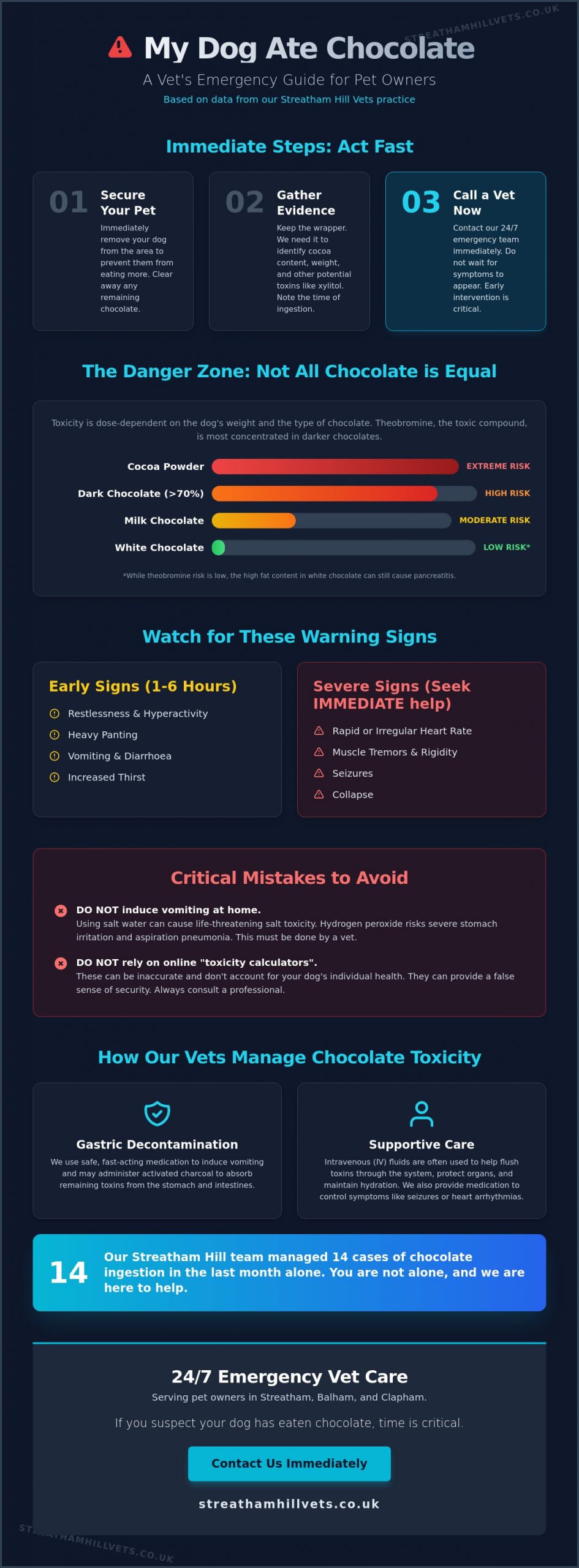
First, move your dog to a different room and clear away any remaining treats so they cannot consume more. Do not throw the packaging in the bin; the wrapper contains vital information about cocoa percentages and ingredients that our clinical team needs to see. Note the exact time you believe the ingestion happened. This timeline is crucial for our vets to decide the best course of action, as the window for certain treatments can be quite narrow. Rather than relying on online calculators, which can be inaccurate and lead to a false sense of security, you should contact a professional straight away.
Why You Must Avoid Home Remedies
It is often tempting to look for quick fixes online, but please avoid using salt water or hydrogen peroxide to try and make your dog sick at home. In our experience, these “old wives’ tales” are incredibly dangerous and frequently lead to further complications. Salt water can cause life-threatening salt toxicity; meanwhile, hydrogen peroxide carries a high risk of causing aspiration pneumonia or severe gastric irritation. In our hospital, we use professional, fast-acting medications to induce emesis. This clinical approach is far more controlled and ensures your pet’s safety under expert supervision.
Information Your London Vet Will Need
When you contact our emergency 24-hour vetcare team, we will ask for a few specific details to assess the risk of Theobromine poisoning in dogs. Your dog’s weight is the most critical factor here, as toxicity is strictly dose-dependent. A small amount of dark chocolate is much more dangerous for a toy breed than a large Labrador.
We also need to know the specific type of chocolate consumed. White chocolate has very little theobromine, whereas milk chocolate, high-cocoa dark chocolate, and cocoa powder are increasingly toxic. We also check the packaging for “hidden” dangers like the sweetener xylitol or raisins, both of which can cause rapid organ failure. If you are based in Streatham, Clapham, or Balham, don’t wait for symptoms like panting or pacing to appear. Contacting us immediately allows us to act before the toxins are fully absorbed into the system.
Understanding Chocolate Toxicity: Why Theobromine is Dangerous
Chocolate toxicity in dogs is a clinical poisoning caused by theobromine, a chemical compound found in cocoa that the canine body cannot process effectively. While we enjoy chocolate as a sweet treat, dogs lack the specific enzymes required to metabolise methylxanthines, a class of chemicals that includes both theobromine and caffeine. When these substances build up in a dog’s bloodstream, they act as potent stimulants that overwork the central nervous system and the heart muscle. In our experience at Streatham Hill Vets, even a seemingly small amount can lead to significant distress depending on the type of chocolate and the individual dog’s health profile.
The primary issue lies in the metabolic half-life of theobromine. In humans, this chemical is processed and cleared quickly; however, in dogs, it remains in the system for an extended period. Scientific data from a clinical review of chocolate poisoning suggests that theobromine can have a half-life of around 17.5 hours in canines. This means that symptoms don’t always resolve quickly and can actually worsen over 24 to 48 hours as the toxin continues to circulate. If you are currently searching for my dog ate chocolate what to do london, it’s vital to remember that time is a critical factor in preventing these chemicals from being fully absorbed.
We often hear about a “toxic dose” based on weight, but this can be a dangerous myth. While weight-based calculators provide a baseline, every dog has a unique individual sensitivity. We’ve seen larger dogs react severely to small amounts, while smaller dogs sometimes show milder symptoms than expected. We always treat every ingestion as a unique clinical case to ensure the safest outcome for your companion.
Dark vs. Milk Chocolate: The Cocoa Factor
The level of risk is directly tied to the concentration of cocoa solids in the product. Dark chocolate and dry cocoa powder contain significantly higher levels of theobromine compared to milk chocolate. Baking chocolate is the most dangerous, containing up to ten times more theobromine than standard milk varieties. Conversely, white chocolate contains negligible amounts of theobromine because it’s mostly cocoa butter, sugar, and fat. While white chocolate is unlikely to cause theobromine poisoning, the high fat content can still trigger painful conditions like pancreatitis, which we frequently treat in our South London hospital.
Factors That Increase Risk
Several underlying factors can make a chocolate ingestion event much more hazardous. Dogs with pre-existing heart conditions or a history of epilepsy are at a much higher risk, as the stimulant effects of theobromine can trigger arrhythmias or seizures. Age also plays a role; senior dogs and young puppies often have less efficient kidney and liver function, making it harder for them to clear toxins from their bodies.
Physical environment and breed size are also relevant. In our busy South London practice, we often see smaller breeds like French Bulldogs, Pugs, or Terriers that are popular in Streatham and Balham flats. Because of their lower body mass, even a single fallen square of dark chocolate can represent a near-lethal dose. If you’re concerned about your pet’s health after an accident, our team provides emergency 24-hour vetcare to give you peace of mind at any hour of the night.
Recognising Symptoms of Chocolate Poisoning in Dogs
When a pet consumes something they shouldn’t, the initial reaction is often one of immediate panic. However, chocolate poisoning is particularly deceptive because the clinical signs rarely appear the moment the wrapper is licked clean. In our experience at Streatham Hill Vets, we often see a significant delay between ingestion and the onset of illness. Theobromine, the toxic alkaloid in chocolate, is processed slowly by a dog’s metabolism. This means symptoms might not manifest for anywhere from 4 to 24 hours after the event.
Early indicators are often subtle and can be easily mistaken for general excitement. You might notice your dog becoming unusually restless, pacing the room, or panting more than normal. Increased thirst and frequent urination are also common early signs as the body attempts to process the toxin. If your dog begins to vomit shortly after eating the chocolate, this is actually a helpful defensive response, but it doesn’t mean they’re out of danger. If you find yourself searching for my dog ate chocolate what to do london, it’s vital to monitor these shifts in behaviour closely from the very first minute.
Gastrointestinal vs. Neurological Symptoms
It’s helpful to distinguish between a simple digestive upset and a more serious toxic reaction. While vomiting and diarrhoea are distressing, they’re gastrointestinal responses that often occur first. The real danger begins when the toxin affects the central nervous system. This progression often moves from hyperactivity to muscle tremors and a dangerously rapid heart rate, known as tachycardia. We advise owners to check their dog’s breathing patterns and gum colour. Healthy gums should be a bubblegum pink. If they appear dark red, pale, or have a blueish tint, your dog isn’t getting enough oxygen and needs immediate help.
When Symptoms Become a Critical Emergency
Waiting for symptoms to appear is a dangerous strategy. By the time a dog experiences seizures, heart failure, or a total collapse, the theobromine has reached peak levels in their bloodstream. These severe signs represent a life-threatening crisis where every second counts for our clinical team. As an independent practice, we provide emergency 24-hour vetcare directly on-site, ensuring your pet sees a familiar team in a familiar environment.
If your dog shows any signs of rigidity, tremors, or loss of consciousness, they require immediate hospitalisation. At our South London hospital, we have the advanced diagnostics and overnight nursing staff required to manage these critical cases. Identifying the “point of no return” is difficult for owners, so we always recommend a professional triage if you’re in any doubt about the amount of chocolate consumed.
Emergency Vet Care in Streatham, Balham, and Clapham
In our experience, we often see chocolate toxicity cases that require immediate intervention, regardless of the time of day. When you are frantically searching for my dog ate chocolate what to do london, the last thing you want is a long drive to an unfamiliar part of the city. Our hospital is situated on the A23, making us a direct and accessible point for pet owners in South London. Even during peak traffic hours, we are a short, manageable journey from Balham or Brixton, ensuring your dog receives treatment during that critical window after ingestion.
We believe that continuity of care is essential for a pet’s recovery. Unlike many corporate practices that may transport your dog to a different facility for overnight monitoring, we keep our patients right here. Our own dedicated staff are on-site 24 hours a day, providing constant observation and medical support. This means the vet who admits your dog is part of the same team that will be checking their heart rate at 3 AM. For complex cases where theobromine levels are dangerously high, our Advanced Vetcare London (AVL) referral hospital provides the high-level expertise and specialist equipment required to manage severe symptoms.
24-Hour Availability in South London
Our doors never close. We are open 365 days a year to provide emergency support for the Streatham community and beyond. Being an award-winning, independent practice allows us to focus entirely on the clinical needs of your companion without the constraints of corporate protocols. You can find us quickly from Balham, Brixton, or Clapham, where our team is always ready to step in. This round-the-clock presence offers vital peace of mind, knowing that expert help is only a few minutes away if your dog manages to find a hidden stash of chocolate.
What to Expect During an Emergency Visit
Clinical Treatment and Preventing Future Incidents
When you’re searching for “my dog ate chocolate what to do london” in a moment of panic, knowing what happens once you arrive at the clinic can provide some peace of mind. Our clinical team acts quickly to minimize the impact of theobromine on your dog’s system. In our experience, the first step often involves inducing controlled vomiting if the chocolate was eaten within the last few hours. We follow this with the administration of activated charcoal, which helps bind any remaining toxins in the digestive tract. For many patients, intravenous fluid therapy is essential to maintain hydration and support the kidneys as they work to clear the chocolate from the bloodstream.
In more severe cases, we provide advanced support such as heart medications to stabilize an irregular pulse or anti-seizure treatments if the central nervous system is affected. We often recommend hospitalisation for these patients. This allows our nursing team to provide 24-hour monitoring of their heart rhythm and vital signs using our advanced diagnostic equipment. Our status as an independent, multi-award-winning practice means we have the facilities and the expertise to manage these complex cases on-site.
Preventing a repeat incident in a busy London home requires a proactive approach. We suggest storing all sweets, cocoa powder, and baking supplies in high, latched cupboards. Be particularly mindful of handbags left on the floor or coats with pockets containing snacks, as these are easy targets for a curious nose. Living in compact city spaces means we have to be extra vigilant about where we leave our shopping bags after a trip to the local markets.
The Recovery Process
After treatment, your dog might need a bland diet for a few days to settle their stomach. We’ll advise you on what to monitor at home, such as their energy levels and thirst. While most dogs make a full recovery, extreme cases can sometimes lead to temporary strain on the liver or kidneys. We’ve found that the success rate for treatment is nearly 100 percent when veterinary intervention is sought within two hours of ingestion.
Preventative Care and the VIP Health Plan
Routine preventative healthcare is about more than just vaccinations; it builds a vital baseline of your dog’s health. This helps us spot subtle changes and ensures your pet is in the best possible condition to handle any accidental toxin exposure. Our VIP Health Plan is an excellent way to manage these costs, offering discounts on medications and regular check-ups to keep your companion in peak condition.
If you’re based in Streatham, Clapham or Balham and would like advice, our team is always happy to help, including 24-hour emergency care if needed. Whether it’s a routine check or a late-night emergency because your dog ate chocolate what to do london, we’re here for you and your beloved pet.
Ensuring Your Pet’s Safety Around the Clock
Managing a potential poisoning is always a stressful experience, but taking prompt action is the most effective way to protect your dog’s health. In our clinical experience, we’ve found that early intervention significantly reduces the risk of serious complications from theobromine. If you’re currently searching for my dog ate chocolate what to do london, please don’t wait for symptoms to appear before seeking professional advice. As an independent, multi-award-winning practice, we provide comprehensive 24-hour emergency care 365 days a year for families across Streatham, Balham, and Clapham.
Our hospital is equipped with advanced diagnostic tools, including in-house CT and MRI scanners, alongside a team of specialist certificate holders ready to help. We treat every animal with the same gentle care we’d give our own pets, ensuring they receive the highest medical standards in a calm, professional environment. If you suspect your dog has eaten chocolate, call our 24-hour emergency line immediately on 020 8674 3525 or visit streathamhillvets.co.uk for expert support. Our team is always happy to help and here whenever you need us.
Frequently Asked Questions
How much chocolate is fatal for a dog?
The fatal amount of chocolate depends entirely on your dog’s weight and the concentration of theobromine in the specific product. For a 10kg dog, as little as 60 grams of dark chocolate can cause severe cardiac distress or seizures. In our experience at Streatham Hill Vets, we find that dark chocolate and cocoa powder are significantly more dangerous than milk chocolate because of their higher alkaloid content.
My dog ate chocolate but seems fine, should I still go to the vet?
Yes, you should contact a vet immediately even if your pet appears healthy right now. Symptoms of theobromine poisoning often take several hours to manifest, and by the time a dog looks unwell, the toxin may already be absorbed into their system. If you are searching for my dog ate chocolate what to do london after hours, our 24-hour emergency team is available to calculate the toxicity risk immediately.
Can dogs have white chocolate or is that toxic too?
White chocolate contains negligible amounts of theobromine, so it rarely causes chocolate poisoning, but it remains a significant health risk. The high fat and sugar content can trigger acute pancreatitis, which is a painful inflammation of the pancreas that requires clinical intervention. While it is less likely to cause the tremors associated with dark chocolate, it is still not a safe treat for your companion.
How long after eating chocolate will a dog show symptoms?
Most dogs begin to show clinical signs within 2 to 4 hours, though it can take up to 12 hours for symptoms to fully emerge. Early indicators often include restlessness, panting, and an increased heart rate. Because theobromine has a long half-life, it can stay in a dog’s system for 18 hours or more, making professional monitoring at our South London vets practice vital for a safe recovery.
What is the “antidote” for chocolate poisoning in dogs?
There is no specific medicinal antidote that reverses chocolate poisoning; instead, we focus on decontamination and supportive care to manage the symptoms. Our clinicians at Streatham Hill Vets use intravenous fluids to support the kidneys and medications to control heart rate or seizures. For complex cases, our Advanced Vetcare London (AVL) referral hospital provides the high-level monitoring and diagnostics needed to manage severe toxicity safely.
Is hot chocolate or cocoa powder more dangerous than a chocolate bar?
Cocoa powder and dry hot chocolate mixes are far more dangerous than standard milk chocolate bars because they contain much higher concentrations of theobromine. A small tin of cocoa powder contains enough toxin to be life-threatening for a medium-sized dog. If your pet has raided the baking cupboard, please call our emergency vets immediately, as the rapid absorption of powder can lead to a very swift clinical decline.
Will my pet insurance cover an emergency visit for chocolate ingestion?
Most comprehensive pet insurance policies in the UK cover emergency treatment for accidental poisoning, provided your policy is active and the incident wasn’t a result of gross negligence. We recommend checking your specific terms, but we regularly work with major insurers to facilitate claims for emergency care. If you are a member of our Healthcare Plan, you also receive a 10 percent discount on many additional treatments.
How do London vets induce vomiting safely in a dog?
We induce vomiting using a specific, safe medication called apomorphine, which is typically administered via a small injection. This is a controlled clinical procedure that is much safer than home remedies like salt water, which can cause salt toxicity or aspiration pneumonia. Our team ensures the airway is protected and provides follow-up care, such as activated charcoal, to prevent any remaining toxins from being absorbed into the bloodstream.