
What if the name ‘kennel cough’ is one of the most misleading terms in veterinary medicine? It’s a name that causes a great deal of confusion for caring pet owners across London. You’ve likely felt the pressure from a groomer or doggy daycare, wondering if this protection is truly necessary for a companion who rarely sees the inside of a kennel. We see this uncertainty every week in our practice, and we completely understand the anxiety it can cause when you’re simply trying to do what’s best for your dog.
This guide is our promise to you for 2026: to provide complete clarity. We’ll demystify this common respiratory illness and explain exactly why the kennel cough vaccine is a cornerstone of preventative healthcare for almost every social dog in our busy city. We will cover everything from how the intranasal and oral vaccines work to what you need to ensure your beloved pet is ‘boarding-ready’ for their next adventure. Together, let’s walk through the science, the local risks, and the simple steps to protect your family member.
Key Takeaways
- Discover why ‘Kennel Cough’ is a misleading name and how the risk extends to any social dog in London, not just those in kennels.
- Understand the specific requirements for vaccination that many London-based dog walkers, daycares, and groomers now have in place.
- Learn how the intranasal kennel cough vaccine works to protect your dog’s respiratory system and the crucial timeframe for it to become effective.
- Recognise the common, mild side effects to expect post-vaccination, including the temporary ‘post-vaccine honk’, for your complete peace of mind.
Understanding Kennel Cough: Why the Name is Misleading
As dedicated pet owners, we all want to provide the best preventative healthcare for our beloved companions. One of the most common concerns we hear about at our Streatham Hill practice is a persistent, hacking cough in dogs. Many immediately think of ‘kennel cough’, but this name is one of the biggest misconceptions in veterinary medicine, especially here in a bustling city like London.
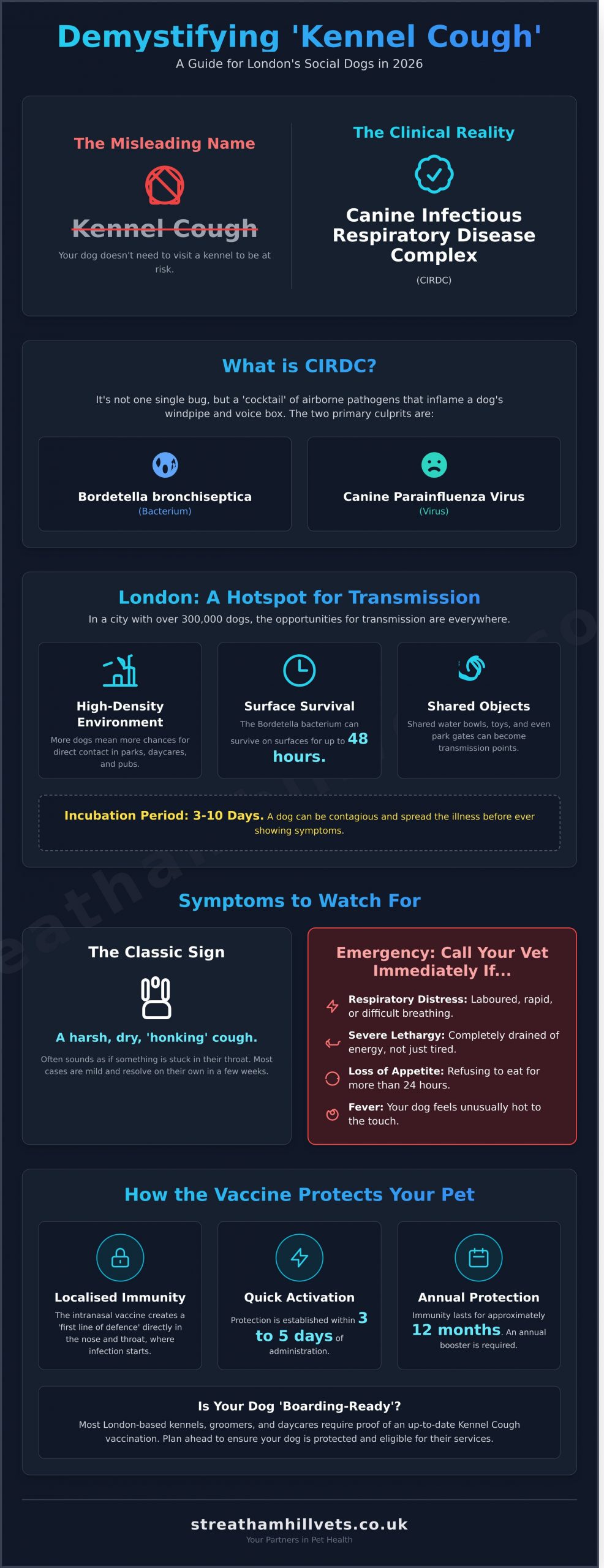
The term is outdated because your dog doesn’t need to have set foot in a kennel to be at risk. A more accurate, clinical term we use is Canine Infectious Respiratory Disease Complex (CIRDC). This name reflects the reality of the illness: it’s not a single bug, but a cocktail of different airborne bacteria and viruses that cause inflammation of a dog’s windpipe and voice box. The two primary culprits we see are:
- Bordetella bronchiseptica: A highly contagious bacterium.
- Canine Parainfluenza Virus: A common viral component.
Together, these pathogens create the classic symptom: a harsh, dry, ‘honking’ cough that can sound distressing, almost as if something is lodged in your dog’s throat. This illness, better known as Kennel cough, spreads through respiratory droplets released when an infected dog coughs, sneezes, or barks. It’s the canine equivalent of the common cold, but its transmission is far more suited to a modern, social city than its name suggests.
The Science of Transmission in Urban Environments
In a city with over 300,000 dogs, the opportunities for transmission are everywhere. The Bordetella bacterium can survive on surfaces for up to 48 hours, turning everyday objects into transmission points. Think of the shared water bowl outside your local cafe, the gate at Streatham Common, or even a discarded tennis ball. A single ‘super-spreader’-a dog who is contagious but not yet showing severe signs-can easily infect dozens of others during one afternoon at a dog-friendly pub or a busy doggy daycare centre. This is why high-density areas like ours in Streatham Hill can become hotspots for respiratory outbreaks.
Symptoms vs. Severity: When is it an Emergency?
Hearing that deep, honking cough can be alarming, but we want to reassure you that most cases of CIRDC are mild and resolve on their own within a couple of weeks, much like a human cold. The key is knowing how to differentiate between mild irritation and a true emergency. While a mild cough is the main sign, you should contact us immediately if you notice:
- Respiratory Distress: Laboured, rapid, or difficult breathing.
- Severe Lethargy: Your dog is not just tired but seems completely drained of energy.
- Loss of Appetite: Refusing to eat for more than 24 hours.
- Fever: Your dog feels unusually hot to the touch.
The incubation period for kennel cough is typically between 3 and 10 days, meaning a dog can be contagious before showing any signs. While many dogs recover well, the illness can be more severe in puppies, older dogs, or those with underlying health conditions. This is where a conversation about the kennel cough vaccine becomes so important, as it can significantly reduce the severity of the symptoms if your dog is exposed.
The Kennel Cough Vaccine: Types and Administration
Protecting your dog begins with understanding how the vaccine works to build a strong defence. Unlike many other inoculations, the primary goal of the kennel cough vaccine is to stimulate powerful, localised immunity directly in your dog’s respiratory tract. By introducing a safe, weakened form of the infectious agents to the nose and throat, we encourage the body to create antibodies right at the point of entry for the real disease. This creates a highly effective first line of defence before an infection can take hold.
This local immunity develops quickly. For the most common vaccine types, protection is typically established within 3 to 5 days of administration. However, this protection isn’t permanent. Immunity lasts for approximately 12 months, which is why we, along with most London-based kennels and daycares, require an annual booster to ensure your companion remains continuously protected against the most prevalent strains.
It’s also useful to know that most kennel cough vaccines are ‘live attenuated’ vaccines. This means they contain a live but weakened version of the bacteria to trigger an immune response without causing illness. While perfectly safe for dogs, it does mean the vaccine can be shed for a short period. For households with severely immunocompromised individuals, we advise a discussion with both your GP and our veterinary team to ensure everyone’s safety and peace of mind.
Nasal, Oral, or Injectable: Which is Best?
We believe in tailoring preventative healthcare to your dog’s individual needs and temperament. That’s why we offer several administration options:
- Intranasal Vaccine: Considered the gold standard for many years, this vaccine is administered as a small squirt of liquid into one nostril. It provides the fastest onset of local immunity and is highly effective.
- Oral Vaccine: A wonderful, gentle alternative for dogs who are head-shy or anxious about nasal sprays. This liquid is simply squirted into the pouch of your dog’s cheek. It’s stress-free and just as effective at building that crucial respiratory tract immunity.
- Injectable Vaccine: While available, the injectable option is generally used less frequently as a standalone for kennel cough. It works by stimulating body-wide (systemic) immunity, which can be less targeted for a respiratory-specific pathogen. An initial course often requires two doses, spaced 2 to 4 weeks apart.
What to Expect During the Appointment
Your visit to our Streatham Hill practice is about more than just a quick jab. It’s a key part of your dog’s overall preventative health plan. Every vaccination appointment begins with a thorough health check by one of our experienced vets. We only vaccinate healthy animals, so this check ensures your beloved companion is fit and well, giving you complete confidence. This preventative approach is recommended by leading global health bodies, including the American Veterinary Medical Association, to reduce the spread of respiratory diseases in canine communities.
We pride ourselves on creating a calm and gentle environment. Our team uses positive handling techniques to ensure your dog is comfortable and feels secure throughout the process. Afterwards, we provide you with an updated vaccination certificate, which serves as official proof for any boarding kennel, training class, or daycare provider who requires it. If you’re unsure which type of kennel cough vaccine is right for your dog, you can always book a consultation with our team to discuss the best path forward.
Does My Dog Need It? Evaluating the Risk for London Dogs
The name ‘kennel cough’ is perhaps one of the biggest misunderstandings in canine health. It suggests the risk is confined to boarding kennels, but that simply isn’t true for our city’s dogs. The reality is that any place where dogs socialise is a potential transmission hotspot. From the bustling paths of Clapham Common to a friendly sniff on a Streatham side street, the risk is determined by contact, not location.
In a densely populated area like South London, your dog’s social circle is likely much larger than you think. The pathogens responsible for what is clinically known as Canine infectious respiratory disease complex (CIRDC) are airborne and spread with incredible ease through coughing, sneezing, or sharing water bowls. This is why we encourage a personalised risk assessment based on your dog’s unique lifestyle, rather than relying on an outdated name.
Social Life and Daycare Requirements
For many Londoners, professional dog walkers and daycares are essential. These businesses are keenly aware of the risks of CIRDC. That’s why over 95% of licensed London doggy daycares and walkers mandate the kennel cough vaccine, requiring proof of vaccination at least 14 days before a dog can join their group. This isn’t bureaucracy; it’s a critical measure to create a ‘herd immunity’ effect that protects every dog in their care. A single outbreak can force a small business to close for weeks, potentially costing them over £2,500 in lost income and disinfection services. By vaccinating your dog, you are not only protecting them but also supporting the local pet care community and ensuring the health of your dog’s best friends.
The Brachycephalic Factor (Pugs, Bulldogs, Frenchies)
For owners of our beloved flat-faced companions like Pugs, French Bulldogs, and English Bulldogs, respiratory health is always a primary concern. These breeds are often affected by Brachycephalic Obstructive Airway Syndrome (BOAS), a condition that already compromises their breathing. An infection that might cause a mild, manageable cough in a Labrador can quickly escalate into a severe respiratory crisis for a brachycephalic dog. Their narrowed airways have no spare capacity to handle the inflammation and mucus that kennel cough causes. For these precious pets, preventative healthcare is paramount. If you regularly walk your Frenchie on Tooting Common or socialise your Pug in the gardens of Balham, the decision is clear. We consider the kennel cough vaccine an essential part of their annual health plan to minimise risk and manage their overall BOAS care.
Ultimately, the choice to vaccinate is a personal one, but it should be informed by your dog’s real-world activities. If your dog is a social butterfly, a daycare attendee, or a vulnerable breed, the benefits strongly point towards vaccination. We are always here to discuss your dog’s specific situation and help you make the most compassionate and responsible choice for their well-being.
Side Effects and Post-Vaccine Care: What Owners Should Know
We understand that your primary concern is your beloved dog’s safety and comfort. It’s completely natural to have questions about what to expect after a vaccination. The great news is that the intranasal kennel cough vaccine is exceptionally well-tolerated by the vast majority of dogs in London. The reactions we do see are typically mild, short-lived, and a sign that your dog’s immune system is building the protection it needs.
Most side effects are directly related to the vaccine being administered into the nose. It’s designed to mimic the natural route of infection to create a robust, localised immune response right where it’s needed most. You might notice:
- Mild Sneezing: A bit of sneezing for a day or two after the vaccination is common.
- Slight Nasal Discharge: A clear, watery discharge from the nose is also normal and usually resolves quickly.
- A ‘Post-Vaccine Honk’: Occasionally, some dogs develop a mild, temporary cough. This is often just the immune system reacting as it should, and it almost always disappears within 48 hours.
Serious adverse reactions are incredibly rare, occurring in fewer than 1 in 10,000 dogs. However, your peace of mind is our priority. If you see symptoms like persistent lethargy beyond 48 hours, facial swelling, hives, or difficulty breathing, it’s vital to seek veterinary attention immediately. This is precisely why our 24-hour hospital provides an unparalleled safety net for your companion.
In terms of aftercare, we recommend keeping things calm for the first 24 hours. A gentle lead walk is fine, but it’s best to postpone any vigorous runs at the park or boisterous play sessions. As the vaccine contains a live (but harmless) component, we also advise keeping your dog away from any friends or family members who are severely immunocompromised for a few days post-vaccination.
Managing Mild Reactions at Home
For the first day or two, it’s wise to use a harness instead of a collar for walks. This avoids putting any pressure on your dog’s throat, which might be slightly sensitive. Keep a gentle eye on their energy levels and appetite; a little quietness for an evening is normal, but they should be eating and drinking as usual. Most mild, expected reactions will completely disappear within 24 to 72 hours.
The 24-Hour Safety Net at Streatham Hill
Choosing a 24-hour veterinary hospital for routine procedures like the kennel cough vaccine isn’t just about convenience; it’s about ensuring a seamless circle of care. Should you have a concern at 3 am, you won’t be speaking to an unfamiliar answering service. You’ll be speaking directly to our dedicated night team, right here in our building. This commitment to around-the-clock availability is central to our promise as an independent, award-winning practice dedicated to the pets of South London. If you have any concerns at all following your dog’s vaccination, please contact our 24-hour team immediately.
Protecting Your Pet with Streatham Hill Vets
Deciding on the right preventative care for your dog can feel like a significant responsibility. At Streatham Hill Veterinary Surgery, we see ourselves as your partners in this journey, providing clear, expert guidance tailored to your pet’s unique lifestyle here in London. Our approach to your dog’s health is comprehensive; we integrate vaccinations, wellness checks, and ongoing advice into a strategy designed to keep your companion happy and healthy for years to come. For the city’s social dogs, this strategy often includes careful consideration of their vaccination needs.
We understand the unique environment our patients live in. From busy parks in Balham to popular doggy daycare centres in Tooting, the opportunities for social interaction are endless, but so are the risks of contagious respiratory illnesses. Our team has served the communities of Streatham, Balham, and Tooting for years, giving us firsthand insight into the local health trends and specific needs of dogs living in SW2, SW12, and the surrounding postcodes. This local expertise allows us to provide advice that is not just medically sound, but also practical for your life in South London.
VIP Plans: Making Healthcare Affordable
We believe that every pet deserves the highest standard of care without causing financial strain for their owners. Our VIP Pet Health Plans are designed to make preventative healthcare simple and affordable. By spreading the cost into manageable monthly payments, you can ensure your dog receives all their essential treatments. These plans typically include annual core vaccinations, year-round flea and worming treatments, and health checks. Crucially, the kennel cough vaccine is included in many of our dog VIP plans, making it easier than ever to provide this important protection. You can explore our VIP Plans here to find the right level of cover for your beloved pet.
Award-Winning Care in the Heart of South London
As a multi-award-winning and proudly independent practice, our focus is entirely on the well-being of your pet. We are not a corporate chain; we are your local vets, deeply invested in the health of our community’s animals here at Streatham Hill Veterinary Surgery. Our convenient location on Streatham Hill makes us easily accessible for residents across South London. When you are ready to book, please have your dog’s previous vaccination records available if you are new to Streatham Hill Veterinary Surgery. This helps us create a complete picture of their health history from day one.
Protecting your dog is a simple step to take. Our friendly team is ready to answer any further questions you may have and help you schedule a visit at a time that works for you. Let’s work together to keep your companion safe, social, and thriving in the city they love.
Book your dog’s kennel cough vaccine today and give your best friend the protection they deserve.
Your Partner in Your Dog’s Lifelong Health
Navigating your dog’s health needs in a busy city like London can feel complex, but protecting them doesn’t have to be. Remember that canine infectious respiratory disease can affect any social dog, not just those in kennels, making the annual kennel cough vaccine a vital piece of preventative care. It’s a simple step that provides significant protection for your beloved companion against this highly contagious illness.
We are here to give you complete peace of mind. As a multi-award-winning independent practice trusted by more than 8,000 local pet owners, our team provides expert advice tailored to your dog’s unique lifestyle. With 24-hour emergency care available on-site, you can rest assured we are always here for you and your pet.
Ensure your dog is protected, book a kennel cough vaccination at Streatham Hill Vets today.
Let’s work together to keep your best friend happy, healthy, and ready for every London adventure.
Frequently Asked Questions About the Kennel Cough Vaccine
Is the kennel cough vaccine mandatory for all dogs in the UK?
No, the kennel cough vaccine is not a legal requirement in the United Kingdom. However, nearly all reputable boarding kennels, doggy daycare centres, and group training classes in London will require up-to-date proof of this vaccination before accepting your dog. We consider it a core part of preventative healthcare for any dog that socialises, as it helps protect the wider dog community from this highly contagious infection.
How long does the kennel cough vaccine last before a booster is needed?
The protection offered by the kennel cough vaccine lasts for 12 months. To ensure your beloved companion remains consistently protected against the most common strains, an annual booster is essential. This is particularly important for dogs living in a busy city like London. As your trusted local vet, we’ll send you a helpful reminder when your dog’s annual vaccination is due, giving you one less thing to worry about.
Can my dog still get kennel cough even if they have been vaccinated?
Yes, it is possible for a vaccinated dog to contract kennel cough, but the symptoms will almost certainly be much milder and the illness shorter. The vaccine protects against the primary bacterial cause, Bordetella bronchiseptica, but kennel cough is a syndrome caused by several pathogens. Think of it like the human flu jab; it significantly reduces the risk of infection and, if it does occur, lessens the severity of the illness.
How many days before boarding should my dog get the kennel cough vaccine?
Your dog should be vaccinated at least 14 days before their stay at a boarding kennel. This two-week window gives your dog’s immune system sufficient time to develop a robust protective response to the vaccine. Most boarding facilities will not accept a dog without proof of vaccination administered at least 14 days prior to check-in, so we always advise planning ahead to ensure a smooth, stress-free start to their holiday.
What is the difference between the nasal and oral kennel cough vaccine?
The main difference is the method of administration, as both are live vaccines designed to create immunity right where the infection starts. The traditional nasal vaccine is given as a small squirt of liquid into one nostril. The newer oral vaccine is a liquid administered into your dog’s cheek pouch. Both are highly effective, and we can discuss which gentle option is best suited to your dog’s individual temperament during your consultation.
Are there any side effects I should watch out for after the vaccine?
Thankfully, side effects are very uncommon and typically extremely mild. Following the nasal vaccine, some dogs may experience a bit of sneezing, a slight clear discharge from the nose, or a mild cough for 24 to 48 hours. This is a normal response from the immune system. If you have any concerns about your pet following their vaccination, please don’t hesitate to call us; our team is here to provide complete peace of mind.
Can a puppy have the kennel cough vaccine at the same time as their puppy jabs?
Yes, the kennel cough vaccine can be safely administered at the same time as your puppy’s primary course of vaccinations. We can give the vaccine from as young as three weeks old, but it is often conveniently scheduled with their second vaccination appointment around 10 to 12 weeks. This ensures your new family member is ready for safe socialisation at puppy classes as soon as their primary course is complete.
Is kennel cough dangerous to humans or other pets like cats?
Kennel cough poses a very low risk to humans; transmission is exceptionally rare and typically only a concern for individuals with severely compromised immune systems. While the primary bacteria can infect cats, this is also uncommon. The real danger of kennel cough is how rapidly it spreads between dogs, causing significant discomfort. Protecting your dog is the most important step in safeguarding our local pet community.