What if that familiar, rhythmic snoring from your flat-faced friend isn’t actually a sign of a peaceful nap, but a signal that they are struggling to move air? We understand that for many South London pet owners, these sounds have become so common they’re often dismissed as “normal for the breed.” However, since the Kennel Club and University of Cambridge launched the Respiratory Function Grading Scheme in 2019, we’ve been able to provide much more than just a guess about your pet’s comfort.
At our dedicated boas grading clinic in Streatham Hill, we believe in providing clarity instead of worry. We know you want the best for your companion, and discovering how their airways are functioning is the first step toward a happier, more active life. This guide explains what happens during a specialist assessment, how it protects your pet’s health, and what practical steps you can take to manage their symptoms. We’ll also look at how this certification helps responsible breeders make informed decisions for future generations. This article is intended for general guidance only. If your pet is unwell or showing concerning symptoms, please contact your vet for professional advice.
Key Takeaways
- Understand the impact of Brachycephalic Obstructive Airway Syndrome (BOAS) on flat-faced breeds and why early awareness is vital for your pet’s comfort.
- Learn what to expect during a professional assessment at our boas grading clinic, where we use the official Cambridge University scheme to evaluate your dog’s respiratory health.
- Discover how to interpret your pet’s grading results and what each level means for their long-term health and daily activity.
- Find out how to prepare your beloved companion for their visit to Streatham Hill Veterinary Surgery to ensure a calm, accurate, and stress-free experience.
- Explore why our independent, award-winning team in South London is uniquely qualified to provide the specialist respiratory care your dog deserves.
Table of Contents
- Understanding BOAS and the Need for a Grading Clinic
- The Respiratory Function Grading (RFG) Scheme Explained
- Interpreting the Grades: What Your Pet’s Result Means
- Preparing for Your Visit to Our Streatham Hill Clinic
- Why Choose Streatham Hill Vets for BOAS Assessment?
Understanding BOAS and the Need for a Grading Clinic
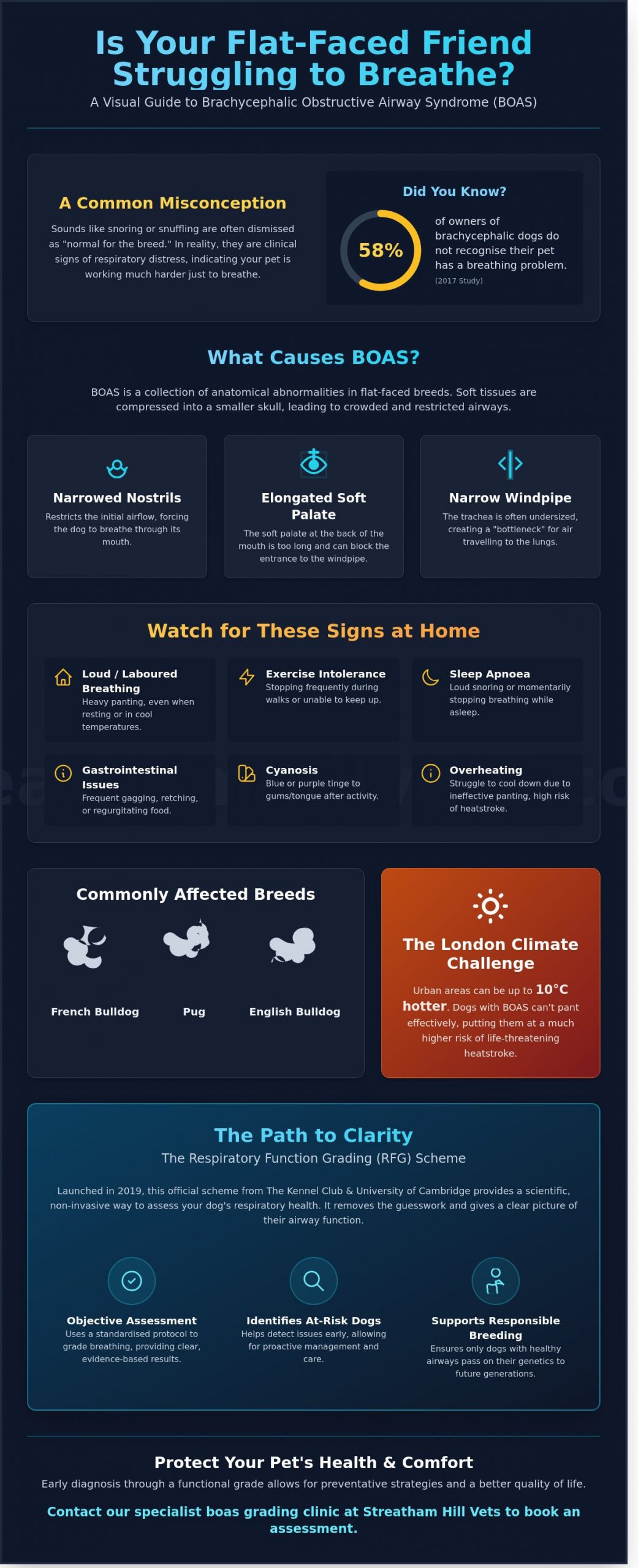
We often see beloved flat-faced companions at our Streatham Hill practice who struggle with the simple act of breathing. This condition is known as Brachycephalic Obstructive Airway Syndrome, or BOAS. It isn’t just one single problem; it’s a collection of anatomical challenges. These include narrowed nostrils, an elongated soft palate, and a windpipe that is often smaller than it should be. Because these pets have the same amount of soft tissue as a long-nosed dog but packed into a much smaller skull, their airways become crowded and restricted.
This syndrome forces your pet to work significantly harder just to draw a single breath. While some people think the snuffling or snoring sounds made by these breeds are endearing, they are actually clinical signs of respiratory distress. Our boas grading clinic provides a scientific, non-invasive way to measure exactly how much your pet’s anatomy is affecting their daily life and long-term health. We use the Kennel Club and University of Cambridge Respiratory Function Grading Scheme to give you an objective assessment of your dog’s airway function.
A 2017 study revealed that 58% of owners of brachycephalic dogs did not recognise that their pet had a breathing problem, even when symptoms were present. Identifying these issues early is vital for their comfort. You might notice specific signs at home that suggest your pet is struggling, such as:
- Loud or Laboured Breathing: Heavy panting even when resting or in cool weather.
- Exercise Intolerance: Stopping frequently during walks or being unable to keep up with other dogs.
- Sleep Apnoea: Snoring loudly or momentarily stopping breathing while asleep.
- Gastrointestinal Issues: Frequent gagging, retching, or regurgitation of food.
- Cyanosis: A blue or purple tinge to the gums or tongue after physical activity.
Which Breeds Need BOAS Grading?
While any flat-faced dog can be affected, we primarily focus on French Bulldogs, Pugs, and English Bulldogs. It’s a dangerous misconception for South London pet owners to believe that noisy breathing is “normal for the breed.” Just because it’s common doesn’t mean it’s healthy. For family pets, a grading provides a roadmap for their care. For those intended for breeding, attending a boas grading clinic is an ethical necessity. It ensures that only dogs with healthy respiratory systems pass on their genetics, helping us protect the future of these wonderful breeds.
The Impact of the London Climate on BOAS
London’s urban heat island effect creates a unique challenge for our local pets. In built-up areas like Brixton and Streatham, concrete and tarmac trap heat, keeping temperatures up to 10°C higher than in surrounding rural areas. Because dogs with BOAS cannot pant effectively to cool themselves down, they are at a much higher risk of heatstroke during the summer months. Early diagnosis through a functional grade allows us to implement preventative strategies. This proactive approach helps you avoid the stress and high costs of emergency out-of-hours vet visits during a respiratory crisis.
This article is intended for general guidance only. If your pet is unwell or showing concerning symptoms, please contact your vet for professional advice.
If you are concerned about your pet’s breathing or wish to book a functional assessment, please contact our friendly team at Streatham Hill Vets today. We are here to support you and your companion every step of the way.
The Respiratory Function Grading (RFG) Scheme Explained
We understand the worry that comes with owning a brachycephalic breed like a French Bulldog, Pug, or Bulldog. To provide the best care for these special companions, we rely on the Respiratory Function Grading (RFG) Scheme. This initiative, launched in 2019, represents a vital partnership between The Kennel Club and the University of Cambridge. It’s designed to identify dogs at risk of Brachycephalic Obstructive Airway Syndrome (BOAS) before their symptoms become severe. By using the BOAS health screening test, we can offer a clear, evidence-based picture of your pet’s respiratory health.
Not every vet can perform this grading. It requires a clinician who has undergone specific training and rigorous assessment by the University of Cambridge. At our boas grading clinic, our experts use a standardised protocol to ensure every dog is judged against the same objective criteria. This removes any guesswork, providing a fair and consistent result for every family that walks through our doors. It’s a completely non-invasive process, meaning there’s no need for your pet to stay in the hospital or undergo any stressful procedures.
The grading system itself is incredibly robust. It categorises dogs from Grade 0 to Grade 3 based on the severity of their symptoms. Research from the University of Cambridge indicates that while some dogs may appear healthy at rest, up to 60 percent of certain flat-faced breeds may actually show signs of airway obstruction during activity. This scheme helps us catch those issues early, ensuring your pet can enjoy a more comfortable and active life in South London. If you’re concerned about your dog’s breathing, you can book an initial consultation with our friendly team to discuss their health.
The Clinical Examination
The process begins with a gentle, hands-on assessment while your dog is calm and relaxed. We look closely at the nostrils, checking for stenotic nares, which are narrow or pinched openings that restrict airflow. Following this, we use a stethoscope to listen carefully to the larynx and trachea. This allows us to detect any abnormal noise or turbulence in the airway. Crucially, this part of the exam requires no sedation or invasive procedures, ensuring your pet remains comfortable and stress-free throughout. We treat every dog as an individual, taking the time to let them settle into the room before we begin our observations.
The Exercise Tolerance Test (ETT)
Once the initial physical check is complete, we move on to the functional part of the assessment. Your dog will take part in a 3-minute brisk walk, designed to safely increase their heart rate and respiratory effort. This simulates the activity they might encounter during a typical stroll around Streatham Hill. Immediately after the walk, our clinician listens to their breathing sounds again to see how their airway handles the increased demand. “The ETT serves as the crucial measure of a dog’s functional airway capacity, revealing how they actually cope with physical exertion in daily life.” This objective data is what makes our boas grading clinic such a valuable resource for local owners. It provides the peace of mind that comes from knowing exactly how well your beloved companion is breathing.
This article is intended for general guidance only. If your pet is unwell or showing concerning symptoms, please contact your vet for professional advice.
Interpreting the Grades: What Your Pet’s Result Means
Receiving the results from a boas grading clinic is a significant moment for any owner of a Frenchie, Pug, or Bulldog. We understand that you simply want your companion to live a comfortable, active life without the struggle of restricted breathing. The Respiratory Function Grading Scheme, which was officially launched in 2019 after years of research by the University of Cambridge, provides an objective assessment of your dog’s airway health. This result isn’t just a number on a certificate. It’s a vital tool that helps us partner with you to protect your pet’s long-term wellbeing.
Grade 0 and Grade 1: The Green Light
These grades indicate that your pet is currently clinically unaffected by Brachycephalic Obstructive Airway Syndrome. A Grade 0 dog shows no respiratory signs, while a Grade 1 dog might exhibit very mild symptoms that don’t yet impact their exercise tolerance. The Kennel Club recommends that only dogs with these scores should be used for breeding. This helps ensure that the next generation of puppies has the best chance of breathing clearly. We often suggest annual re-grading because a dog’s airway function can change as they age. Maintaining an ideal body weight is the most effective way to preserve these positive results. Even a 5% increase in body fat can put unnecessary pressure on the chest and throat, potentially worsening a dog’s score over time.
Grade 2 and Grade 3: Managing the Condition
A Grade 2 result means your dog shows moderate clinical signs of BOAS that require management. You might notice they take longer to recover after a walk or struggle more during the humid summer months in South London. We’ll work with you to implement lifestyle changes, such as using a harness instead of a collar and avoiding exercise during the hottest parts of the day. Grade 3 is a more serious classification. It represents a severe clinical state where the dog’s quality of life is compromised by constant respiratory effort. In these instances, urgent veterinary intervention is usually necessary to prevent secondary health issues. We may discuss advanced surgical options to widen narrow nostrils or shorten an elongated soft palate. Our team can also utilise keyhole surgery for related internal diagnostics, ensuring the most gentle approach for your pet’s recovery.
We know that receiving a higher grade can be an emotional experience. It’s natural to feel worried or overwhelmed when you learn your beloved companion is struggling. At Streatham Hill Vets, we don’t just see a “Grade 3 dog”; we see a member of your family who deserves the best possible care. Our independent status allows us to spend the time needed to explain every option clearly, from weight management programmes to corrective procedures. We’re here to provide the clinical expertise and the emotional support you need to make the best decisions for your pet’s future. Our 24-hour emergency availability means that if your pet ever experiences a sudden respiratory crisis, we’re always here to help, day or night.
This article is intended for general guidance only. If your pet is unwell or showing concerning symptoms, please contact your vet for professional advice.
If you’re worried about your dog’s breathing or want to book an assessment at our boas grading clinic, please contact our friendly team at Streatham Hill Vets today. We’re dedicated to helping every South London pet breathe easier.
Preparing for Your Visit to Our Streatham Hill Clinic
Preparing for a specialized assessment doesn’t need to be a daunting experience for you or your dog. We want your companion to feel relaxed so we can obtain the most accurate clinical results possible. A calm, settled dog provides a much clearer picture of their baseline respiratory function than one who is over-excited or stressed. We recommend ensuring your pet is well-rested before the appointment. Avoid long walks or vigorous play sessions on the morning of your visit to ensure their breathing is at a true resting state when we begin.
Dietary timing is equally vital for a successful session. Since our assessment includes a specific exercise tolerance test, we ask that you don’t feed your dog a heavy meal within three hours of your arrival. This precaution prevents digestive discomfort and significantly reduces the risk of regurgitation while your dog is active. If you’re visiting our boas grading clinic to meet specific breeding requirements, please remember to bring your original Kennel Club registration documents. Having these papers ready allows our administrative team to process the official certification immediately, ensuring your records are updated without any administrative delays.
London travel can often be unpredictable, and we know that heat is the enemy of the brachycephalic breed. We suggest planning your route to our surgery on Sternhold Ave well in advance to avoid unnecessary travel stress. If you’re driving, use your car’s air conditioning to keep the cabin cool. For those using public transport, try to travel during the cooler parts of the day. Keeping your pet’s internal temperature stable before they reach us is a crucial part of a safe and effective diagnostic process.
What to Expect During the Appointment
A typical session at our boas grading clinic lasts between 20 and 30 minutes. We’ve refined our process to be as gentle as possible, using a quiet, dedicated area of the practice to keep your pet’s heart rate stable. Our clinicians start with a thorough resting assessment, followed by a controlled three-minute walk to observe how the airway handles increased demand. You won’t have to wait days for results. Our vets provide immediate feedback, explaining the grade and discussing any necessary lifestyle adjustments or preventative care steps right there in the consultation room.
Local Logistics for South London Residents
Finding us is straightforward for our South London neighbours. There is usually pay-and-display parking available directly on Sternhold Ave or on the adjacent residential streets, though we recommend leaving a few extra minutes to find a space. For those walking from Balham or arriving via public transport, we’re located just a three-minute stroll from Streatham Hill station. To make your arrival even smoother, please register your pet through our online portal before you leave home. This allows us to focus entirely on your dog’s health the moment you step through our doors.
This article is intended for general guidance only. If your pet is unwell or showing concerning symptoms, please contact your vet for professional advice.
Ready to check your dog’s respiratory health? You can book an assessment at our award-winning practice today to ensure your pet is breathing easily.
Why Choose Streatham Hill Vets for BOAS Assessment?
Choosing the right clinical partner for your pet’s respiratory health is a significant decision that impacts their quality of life for years to come. As a multi-award-winning, independent practice, Streatham Hill Vets has provided dedicated, family-focused care to South London for over 40 years. We aren’t part of a large corporate chain; we’re a local team that prioritises the individual needs of your companion above all else. Our status as the “Best Vet in London 2023” reflects our commitment to clinical excellence and the deep, trusting bonds we form with our clients.
Our clinicians possess specialised expertise in brachycephalic health and complex respiratory care. We understand the unique anatomical challenges that Pugs, Bulldogs, and Frenchies face. By visiting our boas grading clinic, you’re accessing a team that combines decades of surgical experience with a gentle, patient-first approach. We’ve seen a 25% increase in brachycephalic registrations over the last two years, which has allowed us to refine our assessment protocols to the highest possible standards.
Peace of mind is essential when managing potential breathing issues. We provide a full 24-hour emergency backup service on-site, ensuring that your pet is never without expert help. If your dog ever experiences a sudden respiratory crisis at 3:00 am, they’ll be treated by a team that already knows their medical history and specific health requirements. This continuity of care is a cornerstone of our practice and a primary reason why pet owners across South London trust us with their beloved companions.
Advanced Facilities and Compassionate Care
Our Streatham site features advanced on-site diagnostics and modern surgical suites designed for complex procedures. We’ve invested over £150,000 in diagnostic equipment recently to ensure we can handle everything from routine grading to intricate airway surgeries. To help manage the costs of preventative healthcare, we offer VIP Plans that provide a structured way to look after your pet’s long-term wellness while saving you money on regular treatments. We’re proud to be a community-focused partner for pet owners in Streatham, Balham, and Clapham, treating every animal with the same care we’d give our own.
Booking Your BOAS Grading Session
Ready to assess your dog’s breathing and secure their future health? You can use our online booking system to find a time that suits your schedule. We believe in being open and honest about the cost of veterinary care, so our prices for grading and consultations are always transparent and competitive. Our boas grading clinic is designed to be a stress-free experience for both you and your dog, providing clear answers and actionable advice.
This article is intended for general guidance only. If your pet is unwell or showing concerning symptoms, please contact your vet for professional advice.
Contact our friendly team at Streatham Hill Vets today to book your session or to ask any questions about your pet’s respiratory health. We’re here to support you and your dog every step of the way.
Prioritising Your Pet’s Respiratory Health
Ensuring your short-nosed companion breathes easily is our shared priority. By understanding the results of the Respiratory Function Grading Scheme, you’re taking a vital step in protecting your pet’s long-term comfort and well-being. At our multi-award-winning independent surgery, our certified RFG Scheme clinicians provide the expert insight you need to make informed decisions for your family. We’ve built our local reputation on providing 24-hour emergency care on-site, ensuring that your beloved pet is supported every hour of the year by a team that truly cares.
Attending a boas grading clinic isn’t just about obtaining a certificate; it’s about identifying potential issues early to prevent future respiratory distress. This article is intended for general guidance only. If your pet is unwell or showing concerning symptoms, please contact your vet for professional advice. Our dedicated team is here to guide you through every stage of your pet’s health journey with compassion and clinical excellence.
Book your pet’s BOAS grading appointment at our Streatham Hill surgery today
We look forward to welcoming you and your companion to our clinic soon.
Frequently Asked Questions
How much does a BOAS grading appointment cost in London?
A BOAS grading appointment at our clinic typically costs £85 for a standard assessment. This fee covers the comprehensive physical examination and the functional exercise test conducted by our Kennel Club approved assessors. If your companion requires additional diagnostics or a longer consultation, we’ll always provide a clear estimate beforehand. We’re proud to offer this service to our South London community, ensuring your flat faced friend receives expert care without hidden fees.
Does my dog need to be sedated for the BOAS grading test?
Your dog won’t need to be sedated for a session at our boas grading clinic because we must observe their natural breathing patterns while they’re fully awake. The test involves a calm clinical assessment followed by a three minute exercise task to see how their airway handles moderate activity. Since sedation would mask the very symptoms we’re looking for, the process is entirely non invasive and stress free for your beloved pet.
At what age should my French Bulldog have its first BOAS grade?
We recommend that French Bulldogs have their first official BOAS grade once they reach 12 months of age. At this stage, their skeletal structure is sufficiently developed for an accurate assessment under the Kennel Club and University of Cambridge scheme. Booking an appointment around their first birthday allows us to establish a baseline for their respiratory health, helping us catch any potential issues before they impact your dog’s quality of life.
Can a dog’s BOAS grade change as they get older?
Yes, a dog’s BOAS grade can certainly change as they get older or if their weight fluctuates. Clinical data suggests that 40 percent of brachycephalic dogs may see a decline in respiratory function as they age due to soft tissue changes. Regular checkups at our Streatham Hill practice help us monitor these shifts. Maintaining a healthy weight is the most effective way you can prevent a grade from worsening over time.
Will my pet insurance cover the cost of BOAS grading?
Most pet insurance providers don’t cover the cost of routine BOAS grading as they view it as a preventative screening tool rather than a treatment for an illness. However, if your vet recommends the assessment because your pet is showing clinical signs of respiratory distress, some policies might contribute toward the cost. It’s always best to check your specific policy documents or speak with your provider to understand your level of cover.
What happens if my dog is graded as a 2 or 3?
If your dog receives a grade 2 or 3, it means they’re showing moderate to severe signs of respiratory difficulty that require clinical attention. We’ll work closely with you to create a tailored management plan, which might include weight loss or surgical interventions like stenotic airway surgery. Our goal is to ensure your companion can breathe comfortably, so we’ll discuss every option with the empathy and expertise your family deserves.
Is BOAS grading mandatory for all Kennel Club registered Pugs?
While BOAS grading isn’t currently mandatory for all Kennel Club registered Pugs, it’s strongly recommended for any dog being used for breeding. Since 2019, the Kennel Club has used these grades to help breeders make informed decisions that improve the health of future generations. Even for non breeding pets, visiting a boas grading clinic is a vital step in proactive healthcare for any flat faced breed in our London community.
How often should I have my dog re-graded at the clinic?
You should ideally have your dog re-graded every 2 years to stay updated with their respiratory health. Because BOAS is a progressive condition, a clear result at age one doesn’t guarantee they won’t develop issues by age three or five. Consistent monitoring at our Streatham Hill surgery allows us to provide the best preventative care, ensuring your pet remains a happy and active member of your family for years.
This article is intended for general guidance only. If your pet is unwell or showing concerning symptoms, please contact your vet for professional advice. If you’re concerned about your pet’s breathing or want to book an assessment, please contact our friendly team at Streatham Hill Vets today.